Culture & Entertainment
Culture and entertainment have undergone a profound transformation in recent decades. What was once a passive experience—standing quietly before a painting or sitting motionless in a theatre seat—has evolved into something far more dynamic and participatory. From museums experimenting with digital extensions to theatres reimagining the relationship between performer and audience, the cultural landscape now offers unprecedented depth and variety for those willing to explore it.
This evolution hasn’t happened in isolation. Technology, shifting audience expectations, economic pressures, and social consciousness have all played crucial roles in reshaping how we create, present, and consume culture. Whether you’re drawn to the meticulous craft of classical music, the visceral energy of live theatre, or the boundary-pushing world of immersive installations, understanding the foundations and current innovations across these domains will deepen your appreciation and help you navigate the rich cultural offerings available today.
How Museums and Galleries Shape Our Understanding
The power of a museum extends far beyond the objects on display. Every exhibition is a carefully constructed narrative, where spatial arrangement guides your emotional and intellectual journey. Curators make countless decisions that influence what you see, in what order, and how you interpret it.
The Art of Visitor Flow and Engagement
Think of an exhibition layout like a musical composition—it has rhythm, crescendos, and moments of quiet reflection. Curators design pathways that control pacing, creating strategic sight lines that draw you forward while preventing cognitive overload. A well-designed space might introduce you to a theme with accessible works before presenting more challenging pieces, allowing your understanding to build progressively.
Lighting plays an equally crucial role. The temperature, intensity, and direction of light don’t just protect delicate artworks—they create atmosphere and direct attention. A single spotlight can transform a sculpture from a static object into a dramatic presence, while softer ambient lighting might encourage contemplative viewing of paintings.
Contemporary Challenges in Curation
Museums today face important questions about representation and colonial legacy. The politics of decolonizing collections involves rethinking not just what is displayed, but how provenance is acknowledged, whose voices interpret the objects, and whether certain items should remain in institutional hands at all. This ongoing conversation reflects a broader shift toward ethical stewardship and inclusive storytelling.
Collaborating with living artists introduces its own complexities. Unlike historical collections, these partnerships require negotiating creative control, installation specifications, and long-term maintenance of works that may use unconventional or degradable materials. Yet these collaborations bring vitality and contemporary relevance that purely historical exhibitions cannot match.
The Rise of Immersive and Experiential Art
Perhaps no trend has captured public imagination quite like the shift from viewing to experiencing art. Immersive installations—environments you enter rather than observe—have proliferated, transforming warehouses, churches, and purpose-built spaces into multisensory spectacles.
Technology Enabling New Forms
Behind these experiences lies sophisticated technology. Projection mapping software analyzes architectural surfaces to warp and align moving images perfectly onto irregular shapes. Sound design creates spatial audio that responds to your position in the room. Sensors can make environments interactive, changing based on movement or crowd density.
The logistics involved are substantial. A single large-scale projection might require multiple high-lumen projectors, extensive calibration, and significant electrical infrastructure. Software specialists must create content that loops seamlessly, often running continuously for months. These productions can cost hundreds of thousands to produce and install.
Critical Perspectives on “Spectacle” Art
Not everyone celebrates this trend. Critics argue that some immersive experiences prioritize Instagram-worthy moments over meaningful content, creating what amounts to expensive wallpaper. The question of whether an installation offers genuine artistic insight or merely sensory stimulation remains hotly debated.
Accessibility concerns also arise. Many immersive spaces feature dark environments with moving lights that can disorient visitors with sensory sensitivities, mobility challenges, or vision impairments. Thoughtful designers now consider these factors from the outset, incorporating quiet spaces, clear pathways, and adjustable sensory intensity.
There’s also the question of longevity. Digital art installations depend on hardware that becomes obsolete, file formats that may not remain readable, and software that requires updating. Preserving these works for future generations poses archival challenges that traditional media never presented.
The Enduring Magic of Live Theatre
Despite—or perhaps because of—our screen-saturated world, live theatre continues to offer something irreplaceable: the psychology of shared presence between actors and audience. This unmediated connection creates a unique energy that varies with every performance, making each showing subtly different.
Understanding the Audience Experience
Your experience as a theatregoer begins before the curtain rises. Seating choice profoundly affects perspective—front-row seats offer facial detail but may miss choreographic patterns visible from the balcony. Side seats provide intimate proximity but oblique sightlines. Each position reveals different aspects of the same production.
Theatre etiquette exists not as snobbish rules but as collective agreements that protect the delicate atmosphere. Silence during performance, minimal movement, and restraint with phones allow everyone—actors included—to maintain the fragile spell of suspended disbelief. The performance doesn’t exist in isolation; it’s co-created by performers and audience together.
Many regular theatregoers report a distinct emotional comedown after powerful performances. This lingering resonance speaks to theatre’s capacity to affect us at depths that more passive entertainment cannot reach. The post-show period often involves processing subtext, symbolism, and themes that continue unfolding in your mind long after you’ve left the venue.
Behind the Curtain: Production Realities
What appears effortless on stage results from months of intensive work. The creative process from script to opening night involves distinct phases, each with its own rhythm and purpose. Table work—actors and directors sitting together to analyze text, discuss character motivations, and explore subtext—lays the interpretive foundation before physical staging begins.
Blocking and movement transform these discussions into spatial reality. Directors choreograph not just where actors stand, but how they move, pause, and relate physically to one another. Technical rehearsal week brings together lights, sound, set changes, and performances, often running late into the night to coordinate hundreds of technical cues with split-second precision.
The economics of theatre present constant challenges. Mega-productions like large-scale musicals might cost millions to mount, requiring ticket sales to remain strong for months or years to recoup investment. Understanding casting rotations and understudies becomes crucial—most long-running shows employ multiple performers for key roles, ensuring continuity when illness or contracts end.
Classical Music: Tradition Meets Contemporary Reality
Symphony orchestras and classical ensembles face a paradox: their artistic standards have never been higher, yet their financial stability has rarely been more precarious. The funding crisis in classical music reflects broader questions about cultural priorities and public support for arts that require substantial resources.
The Collaborative Art of Orchestral Performance
A symphony orchestra represents one of humanity’s most complex collaborative achievements. The conductor serves not as a dictator but as an interpreter and unifier, shaping tempo, dynamics, and phrasing while allowing individual musicians their expressive voice within the collective sound. This balance between individual artistry and ensemble unity requires years of training to achieve.
The venue matters enormously. Acoustic concert halls designed specifically for orchestral music offer natural sound reinforcement and ideal reverberation times. Multipurpose halls, while more economically viable for institutions, often require electronic amplification that can compromise the organic blend of acoustic instruments. The difference is immediately apparent to experienced listeners.
Interpreting and Preserving Musical Heritage
Musical notation presents its own specialized world. The debate between Urtext editions—scores stripped of later editorial additions—and edited versions reflects fundamental questions about authenticity versus interpretive guidance. Performers must develop sophisticated sight-reading skills to translate printed symbols into sound, while also understanding the historical and stylistic context that notation alone cannot fully capture.
Marking up a score becomes a deeply personal practice. Musicians annotate their parts with bowing directions, breathing marks, fingerings, and interpretive reminders that accumulate over years of study. These markings transform a generic printed page into an individualized performance map.
The process of digitizing sheet music raises new preservation questions. While digital archives ensure physical degradation won’t erase musical heritage, they also require ongoing migration to new formats and platforms. Copyright on older music involves complex calculations about when works enter public domain, varying by jurisdiction and the date of the composer’s death.
Festival Culture and Urban Cultural Identity
Certain cities have built their identity around cultural festivals, creating concentrated periods of intense programming that attract visitors from around the world. This model offers economic benefits but also presents challenges for year-round cultural sustainability.
The key lies in leveraging festival infrastructure beyond peak seasons. Venues built or renovated for major events can host grassroots artists and smaller productions throughout the year. The international attention festivals generate can be channeled toward promoting a city’s permanent cultural institutions, literary heritage, and visual arts scene that exist independently of festival calendars.
Festival cities often develop distinct cultural neighborhoods. Street art, music tourism, architectural photography opportunities, and creative industry hubs emerge organically, transforming former industrial areas into cultural destinations. Supporting these grassroots venues ensures cultural vitality doesn’t depend solely on large, officially sanctioned events.
Mastering the Craft: Training and Technique
Whether in theatre, music, or visual arts, professional excellence requires rigorous technical training combined with creative sensitivity. Traditional British acting training, for instance, emphasizes voice projection techniques that allow performers to fill large theatres without amplification, alongside text analysis skills for classical repertoire.
Specialized techniques address specific performance demands. The Alexander Technique helps performers release harmful tension patterns that can cause injury during repeated performances. Stage combat training ensures fight choreography looks convincingly violent while maintaining absolute safety. Understanding iambic pentameter allows actors to honor Shakespeare’s rhythm while making four-hundred-year-old language feel immediate and natural.
Musicians auditioning for orchestras face blind auditions where screens hide their identity, ensuring selection based purely on sound. This process requires not just technical mastery but the ability to perform under pressure, often playing brief excerpts that reveal tone quality, precision, and musicality within minutes.
These professional standards ensure that culture and entertainment continue offering experiences that justify the time, attention, and resources they demand. By understanding what goes into creating these experiences—the decisions, techniques, economics, and innovations—you can engage with cultural offerings more deeply and discerningly, recognizing excellence while also appreciating the human effort and artistic vision that make these moments possible.
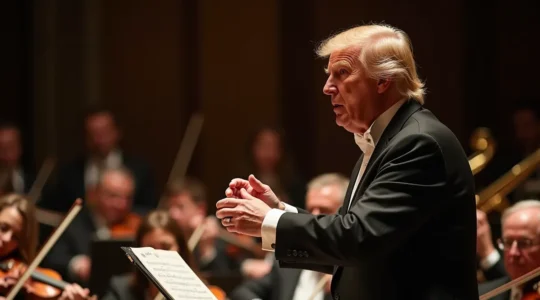
Beyond the Baton: How Do Conductors Interpret the Same Score So Differently?
A conductor’s interpretation isn’t magic; it’s a series of forensic choices about a score’s contested history. The choice between a composer’s “pure” text (Urtext) and a heavily edited performance version is a primary philosophical battleground. Copyright doesn’t just protect the…
Read more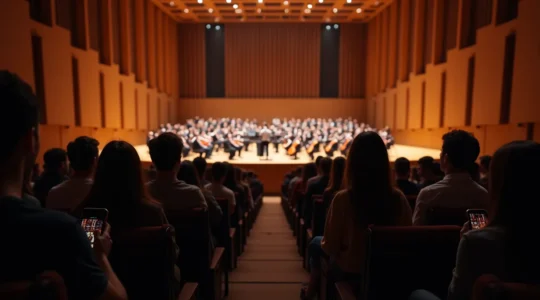
How Symphony Orchestras Are Innovating to Attract Younger Audiences?
Contrary to popular belief, saving the symphony orchestra isn’t about ditching Beethoven for Harry Potter; it’s about a radical internal transformation of the institution itself. This involves diversifying revenue streams beyond unstable ticket sales, which have struggled to recover post-pandemic….
Read more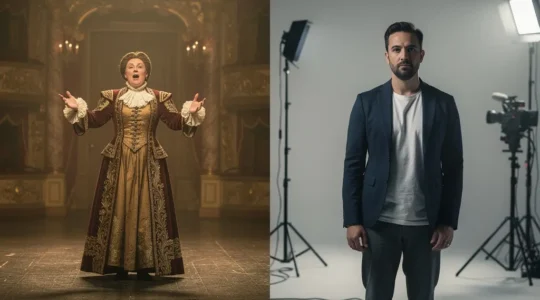
Classical vs. Screen Acting: Why Drama School Discipline is Your Greatest Asset
Classical training isn’t about being ‘big’ for the stage; it’s about building a versatile physical and vocal instrument that excels in any medium. True vocal power comes from breath control and bodily resonance, not yelling. Stage presence is built by…
Read more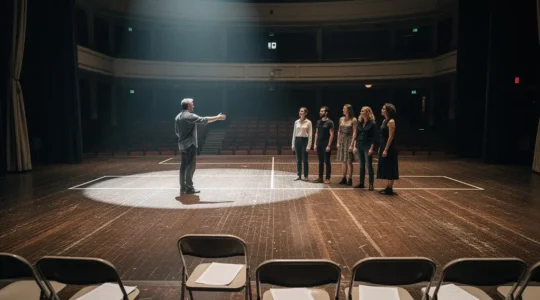
How Does the Rehearsal Process Shape the Final Performance We See?
Most people think theater rehearsals are simply for memorizing lines and learning where to stand. The reality is far more architectural. The rehearsal room is a laboratory where every moment, from the first script reading to the final dress, is…
Read more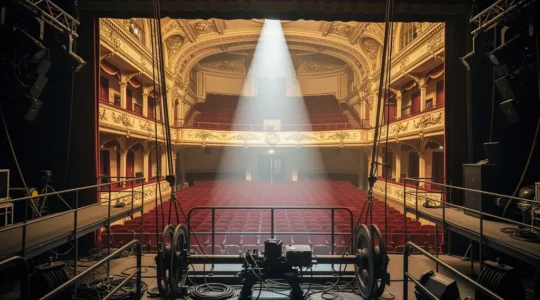
Why Do West End Tickets Cost £150? A Producer’s Guide to Where the Money Really Goes
That £150 ticket isn’t just for a seat; it’s a high-risk investment in a multi-million-pound startup that has a greater than 70% chance of failing. Most shows never recoup their initial investment, meaning the high ticket price is a bet…
Read more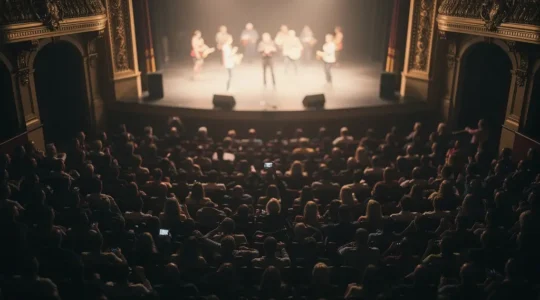
The Unravelling: Why One Distraction Can Collapse a Shared Theatrical World
The magic of theatre relies on a fragile, collective state of ‘shared consciousness’ which can be neurologically ‘infected’ and collapsed by a single distraction. Audience distraction is not an individual problem but a contagious phenomenon that spreads inattentiveness, actively dismantling…
Read more
Manchester’s Soul: How Victorian Red Brick and Modern Glass Forge a City’s Identity
Manchester’s architectural identity isn’t a simple clash of old and new; it’s an ongoing dialogue where Victorian industrial heritage actively shapes and challenges modern design. The city’s iconic red brick, born from local geology and industrial necessity, now serves as…
Read more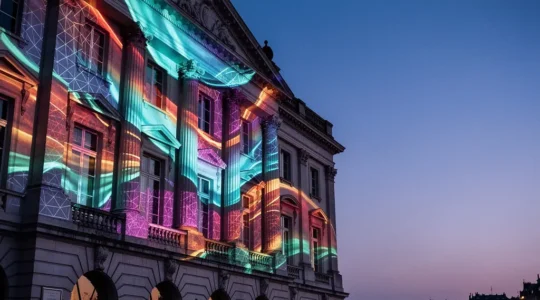
How Video Mapping Turns Static Buildings Into Living Narratives
Contrary to popular belief, projection mapping isn’t just a light show; it’s a form of narrative alchemy that redefines a building’s purpose and economic value. Success depends less on projector brightness and more on mastering non-linear storytelling and understanding the…
Read more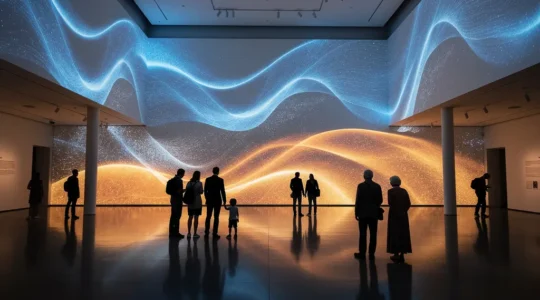
How Immersive Digital Installations Are Changing the Museum Business Model?
Immersive digital art is not just a new exhibit format; it’s a fundamental pivot in the museum’s economic engine, shifting the business model from asset guardianship to scalable experience production. High-priced, high-throughput ticketed events drive unprecedented revenue, but this is…
Read more
How the Edinburgh Fringe Festival Transformation Impacts Local Artists in Winter?
Contrary to the belief that Edinburgh’s culture vanishes after August, the city’s real creative pulse is found in the winter—if you know where to look. The extreme costs of the Fringe force a choice: artists must either leave or strategically…
Read more