Heritage & Museums
Heritage sites and museums occupy a unique position in our cultural landscape, serving simultaneously as guardians of the past and interpreters for the present. These institutions house humanity’s collective memory, from ancient artifacts to industrial architecture, from handwritten manuscripts to bronze sculptures. Yet behind their public-facing galleries and manicured grounds lies a complex ecosystem of scientific conservation, ethical decision-making, architectural adaptation, and evolving interpretive practices.
Understanding heritage and museums means looking beyond the visitor experience to appreciate the multifaceted challenges these institutions navigate. How do conservators halt the deterioration of fragile materials without destroying their authenticity? What happens when a Victorian theatre must balance preservation with modern accessibility standards? How can museums address historical biases in their collections while maintaining scholarly rigor? This exploration examines the interconnected worlds of conservation science, heritage management, architectural stewardship, and public engagement that together sustain our connection to the past.
Experiencing Heritage Spaces: From Visitor to Engaged Observer
Walking into a major museum or heritage site can feel overwhelming. The sensory experience—echoing footsteps on marble floors, the controlled lighting, the hushed atmosphere—creates an environment distinct from everyday life. Understanding these sensory dimensions transforms a passive visit into meaningful engagement.
The architectural acoustics of museum spaces are rarely accidental. High ceilings and hard surfaces that might seem purely aesthetic actually serve conservation purposes, maintaining air circulation while creating a contemplative atmosphere. However, these same features can generate noise levels that interfere with concentration, particularly during peak visiting hours. Timing your visit strategically allows for deeper engagement with individual artifacts without the distraction of crowded galleries.
Meaningful engagement with heritage objects requires a conscious approach:
- Selecting specific galleries for focused study rather than attempting exhaustive coverage
- Observing artifacts without the mediation of smartphone screens, allowing direct visual analysis
- Respecting museum etiquette that protects both the conservation atmosphere and other visitors’ experiences
- Understanding that restrictions on photography, touching, and proximity exist to preserve objects for future generations
Think of museum visiting as similar to wine tasting—quality of attention matters more than quantity consumed. Three objects deeply observed teach more than thirty photographed and forgotten.
The Science Behind Preserving Our Past
Conservation represents the intersection of chemistry, history, ethics, and detective work. Every artifact presents a unique preservation puzzle where scientific knowledge must balance with respect for historical authenticity. The fundamental challenge: how do you stop deterioration without erasing the very patina and wear that tell an object’s story?
The Chemistry of Conservation
Conservators work with an arsenal of solvents, adhesives, and treatments, each requiring precise knowledge of chemical interactions. The danger of over-cleaning remains a constant concern—Victorian restorers often scrubbed Renaissance paintings down to raw canvas, destroying centuries of carefully applied glazes. Modern conservation emphasizes reversibility: any treatment applied today should be removable by future conservators with better techniques.
Consider ink corrosion in historical documents, where iron-gall ink literally eats through paper over centuries. Conservators must neutralize the acid without washing away the ink itself, a process requiring understanding of pH levels, paper composition, and chemical stabilization techniques.
Environmental Control and Digital Preservation
Managing environmental controls in historic buildings creates a paradox: the ideal conditions for artifacts (stable temperature, controlled humidity, minimal light) often conflict with the building’s original design and human comfort. Climate storage solutions balance these competing needs through carefully zoned environments.
Digital preservation techniques now supplement physical conservation, creating high-resolution surrogates that allow scholars to study fragile items without handling originals. Yet light damage calculations remain critical—every moment of exposure, even during digitization, contributes to cumulative deterioration of light-sensitive materials like vellum and watercolors.
Ethics and Economics of Conservation
Ethical dilemmas permeate restoration decisions. Should a damaged statue be restored to its imagined original state, or should repairs remain visible to maintain historical honesty? Private conservation differs fundamentally from museum practice in resources, timelines, and accountability. Meanwhile, funding and grants for conservation projects require justifying expenditure on objects that generate no revenue, making the case for cultural value in economic terms.
Architectural Heritage: Challenges and Transformations
Heritage architecture presents preservation challenges that static museum objects never face: these are buildings people must use, occupy, and navigate safely. Two contrasting examples illustrate the spectrum of adaptive reuse challenges.
Industrial Buildings Reimagined
The adaptive reuse of industrial buildings for modern living has transformed former factories, warehouses, and mills into residential and commercial spaces. These conversions celebrate the architectural honesty of exposed brick, iron columns, and vast windows while confronting practical challenges:
- Insulation and heating in structures designed for machinery, not human comfort
- Soundproofing in buildings with hard surfaces and open plans
- Navigating planning permission for alterations that preserve historic character
- Interior design that respects industrial aesthetics while creating livable spaces
Understanding the history of the factory system enriches these spaces beyond mere aesthetic appreciation, connecting contemporary residents to the labor, innovation, and social transformation these buildings witnessed.
Victorian Theatres: Performance Versus Preservation
Victorian theatres embody different tensions. Their architectural charm—ornate plasterwork, intimate sightlines, horseshoe configurations—comes with inherent challenges. Restricted view seats, a frustration for modern audiences, result from column placements necessary for structural support. Acoustics designed for unamplified voices create dead zones when confronted with electronic sound systems.
Accessibility challenges prove particularly vexing, as adding wheelchair access, modern restrooms, and emergency exits to Grade-listed buildings requires creativity and compromise. The preservation versus modernization debate intensifies when safety regulations conflict with historical authenticity. Should original staircases be widened? Can air conditioning be installed without visual impact?
Conservation as Profession and Practice
Professional conservation demands a rare combination of scientific knowledge, manual dexterity, art historical understanding, and ethical judgment. Career pathways in heritage conservation typically require advanced degrees blending chemistry, materials science, and specialized training in specific media—textiles, paintings, metals, or paper.
The scientific and ethical work of saving artifacts occurs largely behind museum scenes, in laboratories where lab safety protocols rival those of medical facilities. Conservators working with solvents, biological materials, and historical pesticides must protect both themselves and the objects in their care. The chemistry of solvents alone requires extensive study: what safely removes grime from oil paintings can dissolve watercolors entirely.
Preventive conservation represents the most cost-effective approach, whether in museum settings or private collections. Controlling light exposure, maintaining stable environments, and proper handling techniques prevent deterioration that would later require expensive interventive treatment. Home collectors can apply museum principles on modest budgets through thoughtful display choices and environmental awareness.
Managing Heritage Sites in the Modern Era
Heritage sites face a delicate balancing act: generating revenue through tourism while preventing the very visitation that funds preservation from destroying what visitors came to see. This phenomenon, sometimes called “preservation paradox,” requires sophisticated management strategies.
Managing visitor flow protects both physical sites and visitor experience quality. Timed ticketing, capacity limits, and designated pathways distribute wear while maintaining accessibility. Membership value economics create reliable funding streams while building communities of engaged supporters who visit frequently but at off-peak times.
The role of volunteers extends beyond tour guiding to include specialized conservation work, archival processing, and educational programming. Many heritage sites couldn’t function without this dedicated workforce, though it raises questions about professionalizing heritage work versus democratizing access to participation.
Contemporary approaches to heritage estates include unexpected strategies like rewilding—allowing portions of historically manicured grounds to return to natural states, benefiting biodiversity while reducing maintenance costs. Commercial events in historic settings generate crucial revenue but risk compromising authenticity and accelerating deterioration. Each wedding reception in a historic hall, each corporate dinner in a medieval undercroft, represents a calculated trade-off between financial sustainability and preservation ideals.
Uncovering History Beneath Our Feet
Urban archaeology reveals how cities function as layered texts, with centuries of occupation compressed into vertical sequences of streets, foundations, and debris. Excavating these stratified deposits requires understanding stratigraphy—the principle that deeper layers are generally older, though human activity constantly disrupts this simple rule through foundation digging, well sinking, and cemetery reuse.
The developer versus archaeologist conflict intensifies in economically vibrant cities where construction schedules clash with excavation timelines. Planning regulations increasingly require archaeological assessment before major projects, but the pressure to build quickly creates ethical dilemmas about what can reasonably be documented versus preserved in situ.
Sanitation history comparison offers one of archaeology’s most revealing research areas. Analyzing changing approaches to water supply, sewage, and waste disposal across centuries illuminates evolving understanding of disease, changing urban density, and technological innovation. The transition from medieval cesspits to Victorian sewers represents not just engineering advancement but fundamental shifts in how societies organized public health.
Engaging the public with finds transforms archaeology from specialist pursuit to community heritage. Pop-up excavations, volunteer participation programs, and rapid publication of discoveries build public investment in preservation outcomes, turning development sites into opportunities for collective historical discovery.
Reimagining How Museums Tell Stories
Museum interpretation has undergone radical transformation as institutions recognize their role in shaping historical understanding carries profound responsibilities. Modernizing how history is told requires confronting uncomfortable truths about collection origins, exhibition biases, and whose stories have been privileged or erased.
Addressing biased narratives demands more than adding labels acknowledging problematic provenance. It requires rethinking entire interpretive frameworks, consulting descendant communities, and sometimes returning objects to their places of origin. This work proves intellectually demanding and occasionally contentious, but increasingly recognized as essential to institutional legitimacy.
The interactive versus static displays debate reflects broader questions about museum purposes. Interactive elements—touchscreens, hands-on replicas, digital overlays in reality—can deepen engagement, particularly for younger visitors. Yet they risk reducing complex histories to gamified experiences or creating technological dependence that dates quickly. The most effective approaches blend emotional engagement techniques with substantive content, using technology purposefully rather than decoratively.
Designing for kids and adults simultaneously challenges exhibition developers to create multiple entry points into content—physical accessibility for different heights, intellectual accessibility for different knowledge levels, and engagement strategies for different learning styles. Universal design principles benefit everyone, not just their intended audiences.
Heritage sites and museums continue evolving, balancing preservation imperatives with interpretation innovation, scientific rigor with public accessibility, financial sustainability with mission integrity. Understanding these multifaceted challenges enriches every visit, transforming observers into informed participants in the ongoing project of preserving and interpreting our shared past.
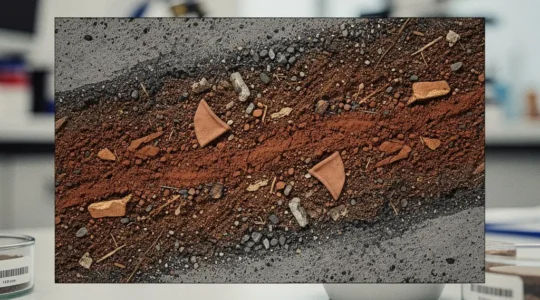
How Archaeologists Read the Urban Palimpsest: Separating Roman from Victorian Layers
The key to urban archaeology isn’t just distinguishing Roman from Victorian; it’s about reading the story of their chaotic, often destructive, interaction. Urban stratigraphy is read like a manuscript, where newer layers (Victorian) are built directly on, and often disturb,…
Read more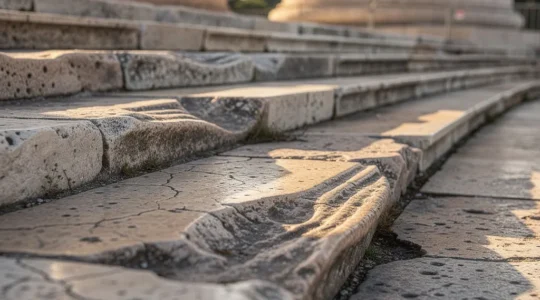
Managing the Unseen Damage: How Mass Tourism Erodes the Physical Fabric of Heritage Sites
Effective heritage preservation hinges on managing visitor impact load, not just visitor numbers. Timed ticketing is only a partial solution; true mitigation involves data-driven analysis of visitor behavior and rethinking site aesthetics for resilience. Commercial activities like events must be…
Read more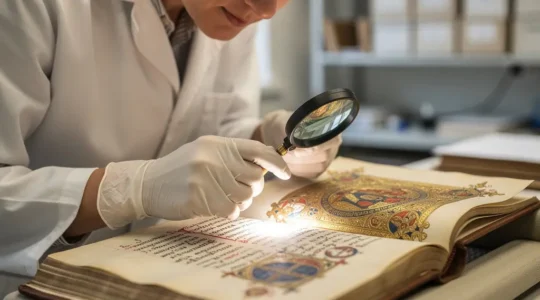
How to Display Medieval Manuscripts Without Fading the Ink?
The desire to share the beauty of medieval manuscripts clashes with the reality that light and air are their mortal enemies. The solution isn’t to hide them away forever, but to shift our thinking from simple rules to active management….
Read more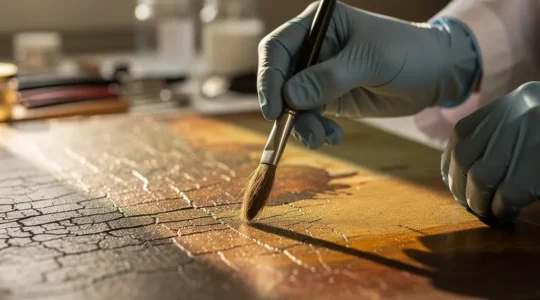
Why Reversibility is the Golden Rule of Modern Conservation?
True art conservation isn’t about making objects look new; it’s an ethical and scientific promise to the future, governed by the principle of reversibility. Minimal, scientifically-backed intervention is always prioritized over aggressive cleaning to preserve an object’s historical integrity. Every…
Read more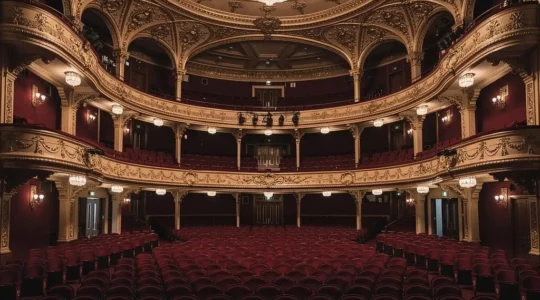
How to Navigate the Cramped Comfort of Grade-Listed West End Theatres?
In summary: Victorian theatre design dictates modern comfort, from restricted views to acoustics. Understanding it is key. Restricted view seats can be smart bargains if you know what to look for, but pillars are not the only obstacle. Accessibility is…
Read more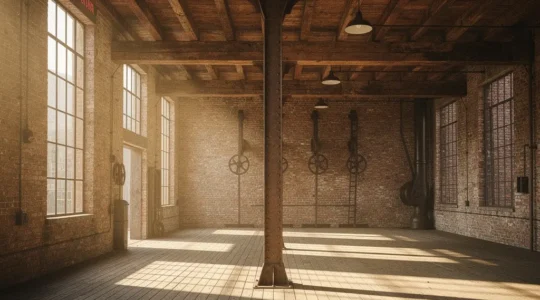
What Are the Hidden Costs of Buying a Converted Textile Mill Apartment?
Contrary to the romantic ‘loft-style’ dream, a converted mill apartment is an industrial machine repurposed for living, with unique physical and financial liabilities. The very features you love—exposed brick and high ceilings—are often the source of significant thermal and acoustic…
Read more
Why Bronze Remains the Gold Standard for Sculpture Despite Modern Alternatives?
Bronze’s enduring value isn’t just its weight, but the months-long, elemental transformation that no modern replica can fake. The lost-wax process is an unforgiving, multi-month commitment of intense labor and risk, destroying the original model to create an eternal copy….
Read more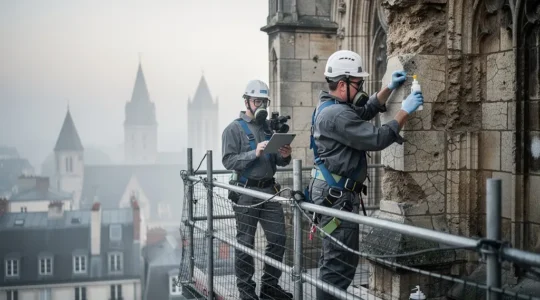
How Do Conservators Stabilize Crumbling Stone Masonry on Historic Sites?
Contrary to the popular image of simply patching up old walls, modern heritage conservation is a forensic science. The true work isn’t in the repair itself, but in the rigorous diagnosis of a structure’s “illnesses”—from chemical decay to environmental stress….
Read more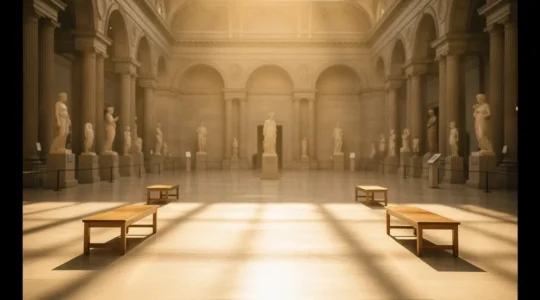
Beyond the Crowds: A Historian’s Guide to Finding Quiet in the British Museum
A truly quiet visit to the British Museum has less to do with avoiding people and more to do with intentionally curating your sensory environment. The architectural design—from the glass roof of the Great Court to the hard surfaces of…
Read more