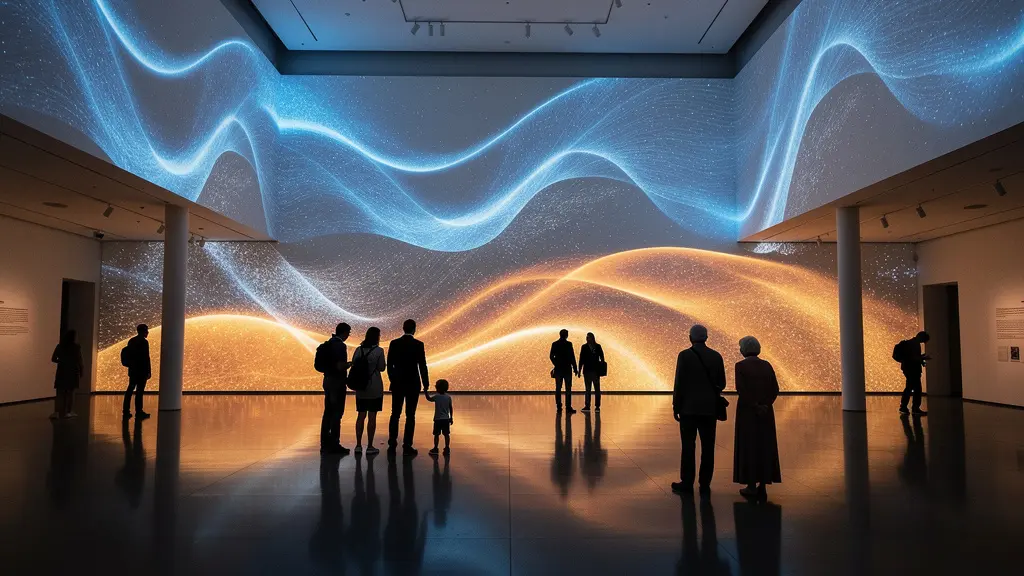
Immersive digital art is not just a new exhibit format; it’s a fundamental pivot in the museum’s economic engine, shifting the business model from asset guardianship to scalable experience production.
- High-priced, high-throughput ticketed events drive unprecedented revenue, but this is balanced by significant capital expenditures on technology and new, ongoing digital conservation costs.
- The “Instagrammability” of these spaces is not a frivolous byproduct but a calculated, low-cost organic marketing flywheel that builds global audience demand.
Recommendation: Museum leaders must evolve their focus from purely curatorial expertise to a hybrid model that incorporates show production, technology lifecycle management, and digital marketing analytics to thrive.
The long queues snaking outside a “Van Gogh: The Immersive Experience” stand in stark contrast to the quiet, contemplative halls of many traditional museums. For museum directors and marketing professionals, this phenomenon is more than just a passing trend; it’s a seismic shift in public consumption of art. The prevailing wisdom suggests this popularity is driven by “Instagrammability” and a desire to attract younger audiences who are otherwise disengaged from the art world. While true, this surface-level analysis misses the profound economic transformation occurring behind the scenes.
This shift represents a departure from the museum’s historical role. The traditional model is one of asset guardianship: acquiring, preserving, and displaying unique, priceless physical objects. The business model of immersive installations, however, is one of experience production. Here, the museum is not a guardian but a producer, creating a scalable, reproducible, and highly monetizable media product. The asset is no longer an irreplaceable painting, but a package of digital content and a precisely calibrated technological environment.
But if the very foundation of the business model is changing, what are the real-world implications for budget, operations, and long-term strategy? This is not a simple debate between original art and digital entertainment. It is an economic reckoning. This analysis will dissect the financial and operational mechanics of this new model, moving beyond the spectacle to examine the capital expenditures, revenue potential, marketing dynamics, and conservation challenges that define the future of the museum business.
This article provides a cultural economist’s perspective on the strategic choices museum leaders face. We will explore the technological backbone required, the impact on art appreciation, the crucial role of sound and sensory design, the long-term challenge of digital preservation, and the calculated use of social media as a marketing engine.
Summary: Decoding the Business of Immersive Art
- Projectors and Sensors: What Tech Specs Are Needed for a Seamless Experience?
- Are Immersive Van Gogh Exhibits Ruining the Appreciation of Originals?
- Navigating Sensory Overload: Is Immersive Art Inclusive for Neurodivergent Visitors?
- Spatial Audio: Why Sound is 50% of the Immersive Visual Experience?
- Bit Rot: How Do You Conserve a Digital Installation for 100 Years?
- The Instagram Trap: Are We Designing for the Eye or for the Phone Lens?
- Virtual Tours: Do They Increase or Decrease Physical Footfall?
- How Do Designers Create the “Flow State” in Immersive Art Experiences?
Projectors and Sensors: What Tech Specs Are Needed for a Seamless Experience?
The transition to experience production begins with significant capital expenditure (CapEx). The “magic” of an immersive installation is built on a foundation of high-performance technology, and for museum directors, understanding the total cost of ownership (TCO) is paramount. The primary choice lies between laser, lamp-based, and LED technologies, each with a distinct financial profile. Laser projectors, while having a higher initial cost, offer a dramatically lower TCO for permanent or long-running exhibitions, providing up to 20,000 hours of continuous use compared to the 2,000-5,000 hours of traditional lamp-based models, which incur recurring replacement and labor costs.
The scale of this investment is not trivial. The “Inside Magritte” exhibition in Milan, for example, utilized 29 high-end laser projectors to animate the artist’s work across the venue’s surfaces, creating a seamless environment by transmitting over 40 million pixels. This level of technological density is what creates the “immersive” quality and justifies premium ticket prices. However, it also introduces new operational complexities, requiring specialized technical staff for calibration, maintenance, and troubleshooting. The choice of technology is therefore a strategic financial decision, not just a technical one.
This table breaks down the core trade-offs for museum leadership when planning a technology investment for an immersive space, based on an analysis of market trends.
| Technology | Initial Cost | Lifespan | Maintenance | Best Use Case |
|---|---|---|---|---|
| Laser Projectors | $15,000-$150,000 | 20,000-30,000 hours | Minimal | Permanent installations |
| Lamp-based | $2,000-$40,000 | 2,000-5,000 hours | Regular lamp replacement | Temporary exhibitions |
| LED Walls | Higher per m² | 50,000+ hours | Modular replacement | High ambient light spaces |
Ultimately, the goal is to select a hardware ecosystem that balances upfront cost with long-term reliability and operational efficiency, ensuring the spectacle is not undermined by technical failures or runaway maintenance budgets.
Are Immersive Van Gogh Exhibits Ruining the Appreciation of Originals?
A common critique from art purists is that immersive exhibits dilute or “ruin” the appreciation of original artworks by transforming them into a form of mass entertainment. From a cultural economist’s perspective, this argument misses the point. These experiences are not a substitute for the original; they are a different product category altogether, functioning as a powerful top-of-funnel marketing tool for the art world. The touring “Van Gogh: The Immersive Experience” has attracted more than 5,000,000 visitors since 2017, a staggering number that represents a largely untapped market segment that may never have otherwise engaged with Van Gogh’s work.
These visitors are not choosing between the immersive show and a trip to the Musée d’Orsay; for many, the immersive show is the first point of contact. It creates brand awareness for the artist in an accessible, dynamic format. As cultural analysts Felix Barber and András Szántó note, this approach has a distinct business advantage:
This dynamic, interactive, all-around, multimedia, easy-to-grasp, theatrical experience may help explain why immersive installations are so popular with diverse audience segments, including children, that museums have long struggled to attract.
– Felix Barber and András Szántó, ARTnews
This shift from the quiet gallery to a dynamic, projected environment represents the core of the new business model: moving from the singular object to the scalable experience.
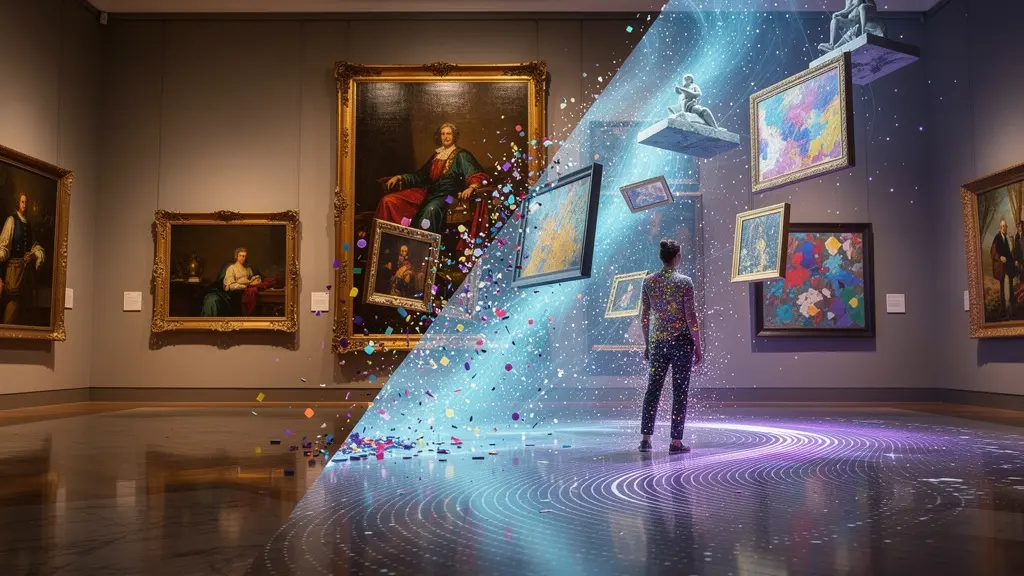
As the image illustrates, the very nature of the museum space is transforming. Rather than “ruining” appreciation, this model acts as a gateway experience, potentially cultivating a future audience for traditional museums. The economic success of these shows demonstrates a profound public appetite for art-as-entertainment, which can be leveraged to fund other curatorial and conservation efforts, fulfilling the museum’s broader mission.
The challenge for museum directors is not to fight this trend, but to understand it and strategically integrate it into a diversified portfolio of public offerings.
Navigating Sensory Overload: Is Immersive Art Inclusive for Neurodivergent Visitors?
The very elements that make immersive art compelling—all-encompassing visuals, high-volume soundscapes, and constant motion—can create significant barriers for neurodivergent visitors, including those with autism, PTSD, or sensory processing disorders. From a business perspective, this is not just an ethical concern but a market-limiting factor. An experience designed for the neurotypical majority may inadvertently exclude a significant portion of the potential audience. For example, some exhibitions feature dramatic audio that can reach levels of 85-90 decibels, similar to an action movie, which can be overwhelming and distressing for sensitive individuals.
Addressing these challenges is key to maximizing audience reach and upholding a commitment to public access. Proactive accommodations transform the experience from potentially hostile to welcoming, broadening the addressable market. This involves moving beyond mere compliance and designing for inclusivity from the outset. Simple, low-cost interventions can make a substantial difference, turning a potential point of friction into a demonstration of institutional care. For instance, providing clear warnings about sensory triggers like loud sounds or floral scents allows visitors to make informed choices. The most successful venues treat accessibility not as an afterthought but as a core component of the visitor experience strategy.
Your Action Plan: Designing for Sensory Inclusivity
- Provide noise-dampening headphones at the exhibition entrance at no additional charge to mitigate audio intensity.
- Offer clear guidance and designated quiet zones for visitors who feel disoriented or overstimulated.
- Communicate clearly on all marketing materials and signage that elements like strong scents or flashing lights are part of the experience.
- Train front-of-house staff to recognize signs of sensory distress and offer assistance or direct visitors to quiet areas.
- Implement “sensory-friendly hours” with reduced volume, lower light levels, and a smaller crowd capacity to cater specifically to this audience segment.
Ultimately, a sensory-inclusive strategy is good business. It expands the potential audience, enhances public reputation, and aligns the commercial success of these new ventures with the museum’s foundational mission of serving the entire community.
Spatial Audio: Why Sound is 50% of the Immersive Visual Experience?
While the visual spectacle of immersive installations captures the most attention, sound design is arguably the component that transforms a projection into an *environment*. From a business standpoint, spatial audio is what elevates the perceived value of the experience, justifying a premium ticket price. A silent, 360-degree projection is merely a dynamic wallpaper; a precisely engineered soundscape creates a sense of presence, directs attention, and elicits emotional responses that visuals alone cannot achieve. It is the key to achieving a “flow state” where the visitor loses track of the outside world and becomes fully absorbed in the artwork.
The investment in a complex audio system is therefore not an ancillary cost but a crucial driver of product quality. In the “Van Gogh Alive” experience, for instance, a state-of-the-art surround sound system is explicitly marketed as a core feature alongside the projections. This synergy of sight and sound is what allows the organizers to brand it as “the world’s most visited multi-sensory experience.” The audio provides narrative structure, emotional cues, and a physical sensation that completes the illusion of being “inside” the art. Without it, the experience would feel hollow and incomplete, diminishing its value proposition.
This sonic architecture works hand-in-hand with advanced projection mapping, which can now wrap imagery around any surface, bringing the entire room to life. The audio grounds the visitor within this newly animated space. By creating a cohesive, all-encompassing sensory world, museums can deliver a more powerful and memorable experience, which in turn drives positive word-of-mouth and justifies a higher price point. The ROI on a sophisticated audio system is measured in the depth of visitor engagement and their willingness to pay for a truly transformative event.
For museum directors, this means allocating budget and technical expertise to sound design with the same seriousness as the visual components, recognizing it as a co-equal partner in creating a premium, marketable experience.
Bit Rot: How Do You Conserve a Digital Installation for 100 Years?
The shift to experience production introduces a new and complex challenge that strikes at the heart of the museum’s mission: long-term conservation. While a traditional museum guards a physical painting against decay, a museum presenting digital art must guard against “bit rot.” The asset—a complex interplay of software, proprietary file formats, codecs, and specific hardware—is inherently fragile and subject to rapid obsolescence. This presents a profound long-term liability that must be factored into the business model. Unlike a painting, a digital installation cannot simply be stored in a climate-controlled vault.
This new form of conservation requires an ongoing operational expenditure (OpEx) that is often overlooked in the initial excitement of a launch. For instance, annual maintenance contracts for immersive installations can range from 5% to 15% of the total initial hardware and software cost. This budget covers software updates, hardware repairs, and data management, but it doesn’t fully solve the problem of long-term preservation. What happens in 20 years when the projectors are discontinued, the operating system is unsupported, and the video codecs are obsolete? The technical complexity is immense.
This is the physical reality behind the ephemeral digital projection. Preserving the experience requires preserving the intricate ecosystem of technology that creates it.
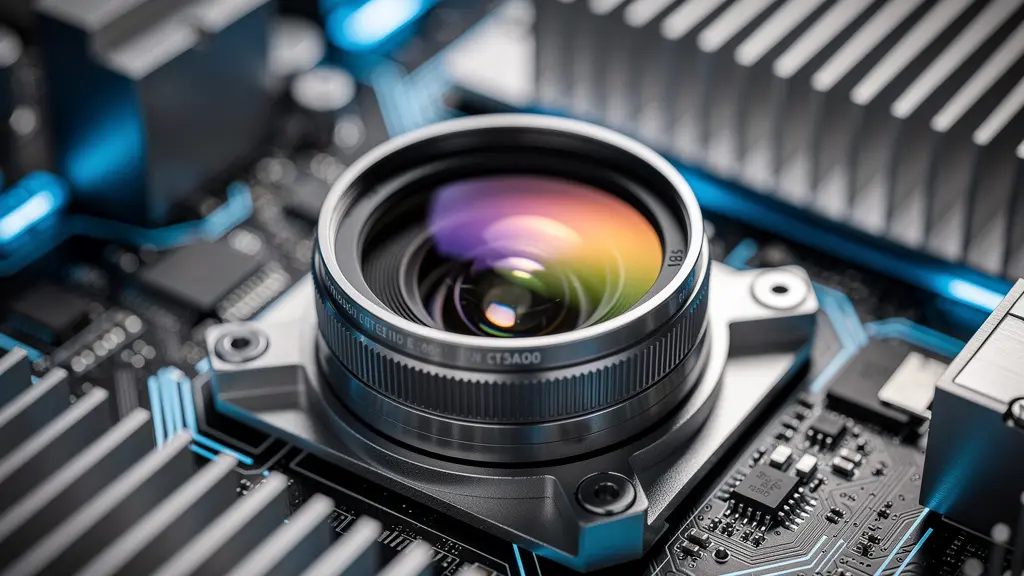
Preserving an immersive work involves complex strategies like code migration, hardware emulation, and detailed documentation of the artist’s intent and technical setup. It requires a new skillset, blending the expertise of a curator, an archivist, and a software engineer. The cost of this digital stewardship must be built into the financial model from day one, or institutions risk acquiring celebrated artworks that become inoperable within a decade.
Therefore, the business model for immersive art must include a dedicated, long-term fund for digital conservation, treating it not as a potential cost but as a guaranteed future liability.
The Instagram Trap: Are We Designing for the Eye or for the Phone Lens?
The term “Instagram Trap” suggests that designing for social media is a compromise that cheapens the artistic experience. However, a more pragmatic economic view reframes this as the “Instagram Flywheel”: a deliberate and highly effective organic marketing strategy. Immersive art collectives like teamLab have built their entire business model on this principle. Their installations are not just accidentally photogenic; they are precision-engineered to be captured and shared, transforming every visitor into a potential marketing agent. This is not a trap; it is a calculated business decision that dramatically reduces customer acquisition costs.
The results of this strategy are undeniable. The teamLab Borderless museum in Tokyo set a Guinness World Record for the most visited museum dedicated to a single art group, attracting nearly 2.3 million visitors in its first year. This success was not driven by a massive traditional advertising budget but by the viral spread of user-generated content across platforms like Instagram and TikTok. The vibrant, ethereal, and interactive environments provide a near-endless supply of visually stunning photo and video opportunities. This content, shared globally, creates a powerful sense of FOMO (Fear Of Missing Out) and builds a pipeline of future ticket-buyers.
From this perspective, the question is not “Are we designing for the eye or the phone lens?” but rather, “How do we design an experience that serves both?” The most successful installations create moments of personal awe and wonder (for the eye) that are so compelling they demand to be captured and shared (for the lens). The phone becomes a tool for amplifying the core experience, not detracting from it. The goal is to create a symbiotic relationship where the visitor’s desire to document their experience directly fuels the exhibition’s marketing and, by extension, its financial success.
For museum marketers, the key is to lean into this dynamic, creating designated photo spots, promoting hashtags, and encouraging sharing as part of the overall visitor journey, thus maximizing the return on the marketing flywheel.
Virtual Tours: Do They Increase or Decrease Physical Footfall?
A persistent fear among museum directors is that offering robust digital experiences, such as virtual tours, will cannibalize physical ticket sales. Why would someone pay to visit in person if they can see it for free online? However, emerging data suggests the opposite is true: digital engagement often functions as a powerful catalyst for physical attendance. A well-executed virtual tour is not a substitute for the real thing but a trailer—a marketing tool that whets the appetite and converts digital viewers into paying visitors.
The COVID-19 pandemic served as a massive, unplanned experiment in this dynamic. While physical visits to Swedish museums plummeted, they simultaneously recorded an astonishing 216 million digital visits to their online offerings. This explosion in digital engagement kept museums relevant and in the public consciousness during lockdown. More importantly, it cultivated a global audience, many of whom may have been unfamiliar with these institutions before. This digital reach creates a vast pool of potential future tourists. For them, the online experience is a discovery phase; the physical visit becomes the ultimate goal.
Strategically, a virtual tour should be designed to showcase the highlights without giving away the entire experience. It’s about demonstrating value and creating desire. By offering a taste of the immersive environment, a museum can de-risk the purchasing decision for a potential visitor. They see the quality and scale of the production and are more likely to commit to a high-priced ticket. Furthermore, analytics from these virtual tours provide invaluable data on which artworks or exhibits are most popular, informing future programming and marketing campaigns for the physical space. The digital offering becomes a lead generation and market research tool for the core physical product.
The most forward-thinking institutions are now building global digital memberships, monetizing their international online audience while simultaneously using that platform to encourage future in-person tourism.
Key Takeaways
- The dominant business model is shifting from priceless asset guardianship to scalable, high-throughput experience production, requiring new financial and operational thinking.
- The high capital expenditure on technology is a long-term investment that must be balanced against ongoing operational costs for maintenance and complex digital conservation.
- “Instagrammability” should not be seen as a frivolous byproduct but as a core, calculated marketing asset that creates a powerful, low-cost customer acquisition flywheel.
How Do Designers Create the “Flow State” in Immersive Art Experiences?
The ultimate goal of an immersive installation, and the key to its premium value, is to induce a “flow state” in the visitor—a state of complete absorption where one’s sense of self and time fades away. This is not achieved by simply projecting pretty pictures on walls. It is the result of a meticulous design process that manipulates space, interaction, and sensory input to guide the visitor into a state of mindful presence. For collectives like teamLab, this is a core design principle. Their work is explicitly designed to dissolve the boundaries between the artwork, the viewer, and other people in the space.
One key technique is the use of responsive environments. In teamLab’s “Floating Flower Garden,” the artwork is not a static loop but a dynamic system that reacts to human presence. As visitors move, the dense mass of living orchids hanging from the ceiling slowly rises, creating a personal dome-like space around them. When two people meet, their spaces merge. This interaction makes the visitor an active participant, not a passive observer. The artwork is “continuous with your body,” creating a powerful connection that fosters the flow state.
Another principle is the removal of clear pathways and boundaries. By creating a continuous, explorable space without a defined start or end, designers encourage a state of wandering and discovery. This breaks the typical museum-goer’s pattern of moving from one discrete object to the next. Instead, the visitor is enveloped within a single, cohesive world. The combination of responsive technology, spatial audio that fills the environment, and a seamless visual canvas works to eliminate external distractions and focus the mind entirely on the sensory experience at hand. This deep level of engagement is the “product” that visitors are paying for.
For museum leaders, the next step is to move beyond viewing these installations as art projects and begin analyzing them as strategic business units. It requires a shift in mindset to embrace the role of show producer, technology manager, and data-driven marketer to fully capitalize on this new economic engine for the art world.
Frequently Asked Questions on How Immersive Digital Installations Are Changing the Museum Business Model?
What are the main challenges in preserving digital installations?
File formats can become corrupted or incompatible with future systems, requiring careful management of formats, codecs, and data storage for long-term archiving.
Can complex immersive installations be truly replicated?
The experience is often tied to specific hardware and its calibration in a particular space, making true replication challenging if original artists or technical teams are no longer involved.
What preservation strategies are being explored?
Robust digital archiving strategies and potentially ’emulation’ of old hardware/software are being explored to ensure groundbreaking digital art can be experienced by future generations.