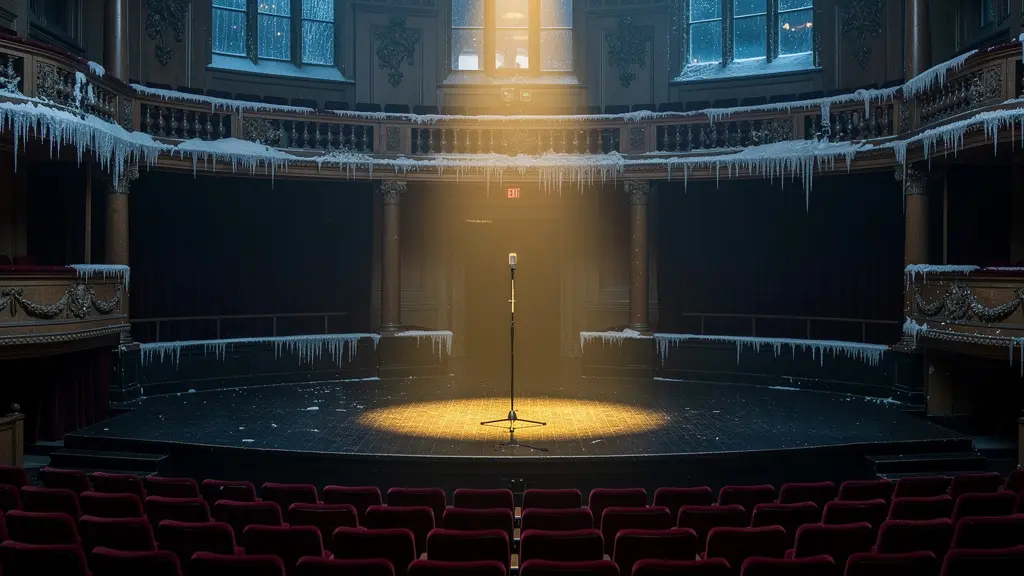
Contrary to the belief that Edinburgh’s culture vanishes after August, the city’s real creative pulse is found in the winter—if you know where to look.
- The extreme costs of the Fringe force a choice: artists must either leave or strategically repurpose the festival’s infrastructure for year-round survival.
- Institutions like the Fruitmarket Gallery provide a blueprint for this resilience, while residents hold the key to supporting a fragile ecosystem of independent venues.
Recommendation: Shift your focus from the August spectacle to the intimate, authentic cultural experiences happening now. Your ticket purchase is a direct investment in the city’s creative soul.
Every September, a peculiar silence descends upon Edinburgh. The roar of a million footsteps fades, the kaleidoscopic flurry of flyers vanishes, and the city exhales. For many residents, it’s a welcome respite. But for the local artists who call this city home, it marks the beginning of a long, quiet season of cultural hibernation. The common narrative is simple: the Edinburgh Fringe Festival is an impossibly expensive, chaotic beast that inflates the city for one month, only to abandon its creative class for the other eleven. We lament the soaring accommodation costs and the financial precarity it imposes on performers.
But this view, while true, is incomplete. It frames the Fringe merely as a problem to be endured rather than a structural paradox to be understood. What if the very forces that create the August cultural explosion—the venues, the networks, the global reputation—could be strategically repurposed to build a more sustainable, year-round cultural ecosystem? The real question isn’t just about surviving the Fringe, but about leveraging its legacy to combat the winter chill. It’s about transforming the post-festival ‘hangover’ into a period of creative resilience and opportunity, fostering an essential symbiosis between local artists and the residents who remain long after the tourists have departed.
This article moves beyond the typical complaints to explore the practical realities and strategic pathways for Edinburgh’s artistic community in the off-season. We will dissect the financial barriers, spotlight the models of year-round success, and identify how both artists and audiences can contribute to a city where culture thrives not just for one month, but for twelve.
Summary: Surviving the Post-Fringe Winter: A New Cultural Strategy for Edinburgh
- Accommodation Prices in August: How Artists Survive the Rent Hike?
- Literary Pub Tours: Tourist Trap or Genuine Historical Insight?
- The Fruitmarket Gallery: Why It Remains Relevant All Year Round?
- Shooting the Old Town: How to Avoid the standard Postcard Angles?
- The Struggle of Independent Venues: Which Ones Need Your Ticket Sales Now?
- Move to London or Stay North: Where are the Best Opportunities for New Actors?
- Copyright on Facades: Do You Need Permission to Project onto a Public Building?
- Is It Possible to Make a Living Solely as a Performer in the UK Today?
Accommodation Prices in August: How Artists Survive the Rent Hike?
The first and most brutal hurdle for any artist connected to the Fringe is not creative, but financial. The August accommodation crisis has become a grim annual tradition, fundamentally warping the festival’s accessibility. It’s a barrier that doesn’t just affect visiting performers; it has a profound knock-on effect on local artists who may be subletting their own flats to survive or find their own rents permanently inflated by the festival city effect. The numbers paint a stark picture of an unsustainable market. For performers, the dream of a breakthrough show is often eclipsed by the nightmare of simply finding a place to sleep.
The financial strain is staggering. Recent data shows the average nightly Airbnb rate during the 2024 Fringe was £281, a figure that is simply untenable for artists on a shoestring budget. This isn’t just a minor inconvenience; it’s an existential threat to the open-access principle the Fringe was built on. Evidence submitted to the Scottish Parliament by the Fringe Society itself highlights the severity, noting that costs have soared by up to 300 per cent in six years. Some performers face charges of up to £9,000 for a one-bedroom flat for the festival’s duration. This economic reality forces artists into a desperate calculus: either incur massive debt, rely on crowded and often unsuitable shared living, or abandon the prospect of participating altogether. This gatekeeping-by-cost fundamentally alters the artistic landscape long before the first curtain rises.
For local artists, the impact extends far beyond August. The inflated market creates a year-round housing pressure, contributing to a creative drain as artists question whether they can afford to live in the very city that hosts the world’s largest arts festival. Survival becomes a game of financial acrobatics, often detached from artistic creation itself.
Literary Pub Tours: Tourist Trap or Genuine Historical Insight?
When the festival behemoth recedes, what remains of Edinburgh’s performance culture? The answer is often found not in grand theatres, but in the warm, wood-paneled corners of its historic pubs. Activities like literary pub tours represent a critical counterpoint to the Fringe’s scale. While some may dismiss them as tourist-centric, they embody a model of performance that is intimate, sustainable, and deeply woven into the city’s fabric. This is where the audience-artist symbiosis becomes tangible in the quieter months.
These performances thrive on a smaller, more personal scale, offering a genuine connection that is often lost in the noise of August. The storyteller or actor isn’t a distant figure on a large stage but a fellow patron sharing a story, their performance amplified by the room’s natural acoustics and history.
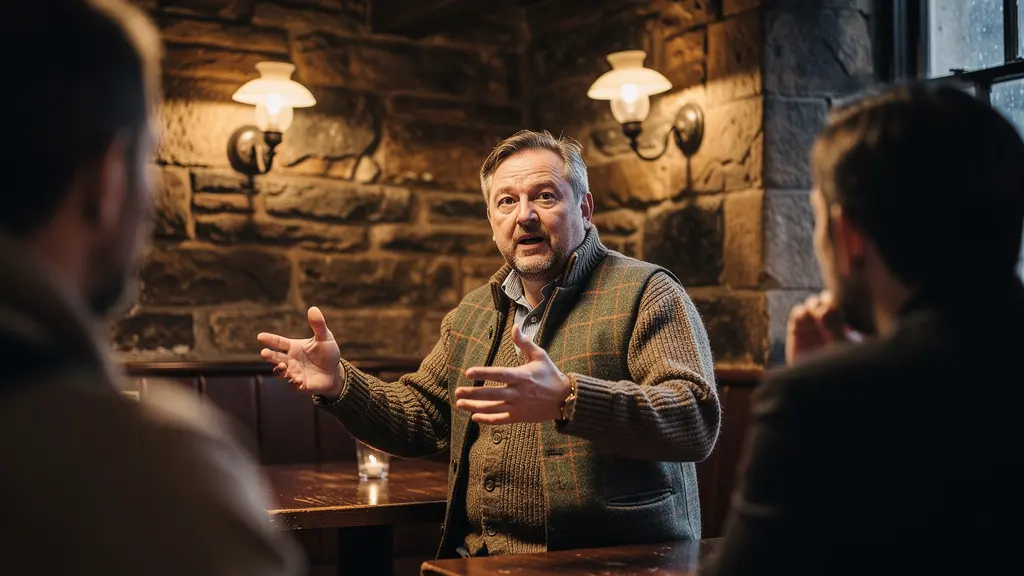
As the image suggests, this form of cultural expression is about atmosphere and authenticity. It’s a performance that couldn’t exist in a cavernous venue; it relies on the close proximity of the audience, the clinking of glasses, and the shared warmth against the winter cold. For the performer, it offers a consistent, if modest, income stream outside the boom-and-bust cycle of the Fringe. For the resident audience, it’s an accessible and affordable way to engage with live art, transforming a casual pint into a cultural experience. These small-scale events are the lifeblood of the city’s year-round creative scene, proving that impactful performance doesn’t require a festival budget.
Ultimately, whether it’s a tourist trap or genuine insight depends on the quality and intent. But for many local actors, these tours are a vital part of their professional portfolio, allowing them to hone their craft and make a living in the city they call home, long after the festival has packed up and left.
The Fruitmarket Gallery: Why It Remains Relevant All Year Round?
A free, public space for culture in the heart of Edinburgh, Fruitmarket provides inspiration and opportunity for artists and audiences.
– Fruitmarket Gallery, Official Gallery Statement
The Fruitmarket Gallery stands as a powerful case study in year-round resilience. While other spaces may feel the dramatic ebb and flow of festival crowds, the Fruitmarket has successfully cultivated a consistent presence and loyal audience, making it a cornerstone of Edinburgh’s cultural life regardless of the season. Its success isn’t accidental; it’s the result of a deliberate strategy that other cultural organizations can learn from. It has fundamentally rejected the festival-dependent model and instead embedded itself into the daily life of the city.
Since its first show in 1974, the gallery has built a formidable reputation by hosting world-class artists like Jean-Michel Basquiat, David Hockney, and Marina Abramović, proving that excellence is not confined to August. But its relevance goes beyond big-name exhibitions. The key to its enduring appeal lies in a three-pillar strategy that fosters deep community engagement:
- Deep community programming: It hosts regular workshops, talks, and events throughout the year, creating an ongoing dialogue between local artists and audiences, rather than a fleeting festival interaction.
- Strong membership model: By building a loyal base of supporters, it ensures a steady stream of visitors and a stable financial foundation, insulating it from the seasonal whims of tourism.
- Third space functionality: Operating as a vibrant café and a leading independent bookshop alongside its galleries, the Fruitmarket provides multiple daily reasons for people to visit, making it a social hub as much as a cultural destination.
This model demonstrates a crucial principle: for cultural institutions to thrive year-round, they must offer more than just art on walls. They must become indispensable parts of the community’s social and intellectual life.
The Fruitmarket’s success is a testament to the power of strategic repurposing, turning a gallery space into a living, breathing community asset that nurtures the city’s creative soul 365 days a year.
Shooting the Old Town: How to Avoid the standard Postcard Angles?
For photographers and visual artists, the challenge of winter in Edinburgh is not a lack of subjects, but a lack of imagination. The city, stripped of its festival crowds, reveals a more subtle and textured beauty. Yet, too often, the visual narrative remains stuck on the same tired “postcard angles”—the wide shot of the Castle, the endlessly photographed curve of Victoria Street. To truly capture the city’s winter soul, an artist must shift their perspective from the grand and obvious to the small and intimate. It requires a deliberate choice to see the city not as a tourist landmark, but as a living place defined by its details.
The key is to focus on texture, light, and atmosphere. The low winter sun creates long, dramatic shadows in the closes. Fog shrouds the familiar in mystery, and frost etches intricate patterns on ancient cobblestones. This is where the real visual poetry of Edinburgh in winter lies.

This close-up view of frosted stone is a perfect metaphor for this approach. It ignores the grand architecture to find beauty in the overlooked details. Capturing this side of the city is an act of strategic repurposing of one’s own creative vision. It’s about telling a different story—one of quietness, history, and resilience. This not only produces more original work but also connects the artist more deeply to their environment, fostering a relationship with the city that goes beyond its festival identity.
Your Checklist: Auditing Your Old Town Photography
- Points of contact: List all channels where you find your photo spots. Are they dominated by tourist-focused Instagram tags and generic guidebooks?
- Collect: Inventory your last 20 photos of Edinburgh. How many are wide shots of the Castle, the Royal Mile, or Victoria Street?
- Coherence: Do these shots reflect the quiet, textured, and often moody character of the winter city, or do they replicate a generic, sunny tourist brochure?
- Memorability: Identify which of your photos captures a unique detail—a specific pattern of frost, a fleeting moment of light in a close, a weathered texture—versus a scene anyone could capture.
- Plan of integration: For your next photo walk, set a specific constraint: dedicate the entire session to capturing only textures, shadows, or the interplay of light and stone within a single close.
By consciously moving away from the standard shots, artists can create a body of work that is not only more compelling but also a more honest reflection of Edinburgh’s year-round character.
The Struggle of Independent Venues: Which Ones Need Your Ticket Sales Now?
When the pop-up venues of the Fringe are dismantled, the city’s permanent independent venues face their toughest season. These are the spaces—the small basement theatres, the backroom comedy clubs, the live music bars—that form the backbone of Edinburgh’s cultural infrastructure. During August, they are overwhelmed; from September to July, they often struggle to fill seats. This is the central paradox of the city’s scene: a worldwide reputation for culture that doesn’t always translate into year-round local support.
The Fringe Society’s own consultations reveal a worrying trend. As one response to a parliamentary inquiry noted, the festival’s spiraling expenses are creating a negative perception among visitors. The statement warns, “The main barriers to attendance appear to be general cost, including accommodation, so the Fringe is potentially starting to be seen unfavourably by our visitor economy.” If even the festival’s own audience is beginning to question the value proposition, the reliance on a single month of frantic activity becomes an even riskier strategy for the city’s cultural health. The survival of these venues depends on a fundamental shift: from a tourist-driven economy to a resident-supported community.
Venues like The Stand Comedy Club, Summerhall (which runs a year-round programme), the Traverse Theatre, and Sneaky Pete’s are not just businesses; they are vital hubs for artistic development. They provide a stage for emerging local talent to experiment, fail, and grow. They are where the next Fringe hit might be workshopped in the dead of winter. Without a consistent audience, these spaces face a precarious existence. Your ticket purchase in November is a far more impactful statement of support for the local arts ecosystem than one in August. It is a direct investment in the city’s creative future, ensuring that the infrastructure for performance remains intact and ready for artists to use all year long.
Supporting them is not just an act of consumption, but an act of cultural stewardship, ensuring that Edinburgh remains a vibrant creative city for residents, not just for visitors.
Move to London or Stay North: Where are the Best Opportunities for New Actors?
For any emerging actor in the UK, the “London or bust” mentality has long been the default career path. The capital’s gravity, with its concentration of agents, casting directors, and major productions, is undeniable. However, for an artist based in Edinburgh, the Fringe paradox presents a more nuanced choice. The festival, despite its financial toxicity, can act as a powerful career accelerator, creating opportunities that challenge the need for an immediate move south. The question is how to strategically leverage those opportunities for a sustainable career in the north.
The data shows that participation can indeed pay off professionally. Research from the Fringe Society reveals that 76% of artists stated the Fringe had a positive professional impact. The key is what happens next. A successful Fringe run is not an end in itself but a beginning. It’s a dense, month-long networking event that, if navigated wisely, can open doors across Scotland and the North of England. Instead of seeing London as the only option, savvy actors are using their Edinburgh-built connections to forge alternative, and often more stable, career pathways.
This strategic repurposing of festival contacts involves several concrete actions:
- Convert Fringe reviews and contacts into touring opportunities across Scotland’s vibrant regional theatre network (e.g., Dundee Rep, Pitlochry Festival Theatre).
- Leverage Edinburgh’s proximity and connections to tap into the burgeoning voice-acting and games industry in nearby Dundee.
- Build a digital portfolio through web series or podcasts, using the Fringe buzz as a launchpad to bypass geographical constraints entirely.
- Explore other emerging creative hubs like Glasgow, Manchester, and Bristol, which offer a lower cost of living and thriving arts scenes without the hyper-competition of London.
For many, building a career from an Edinburgh base, supplemented by strategic travel, is proving to be a more resilient and artistically fulfilling path than a direct leap into the London fray.
Copyright on Facades: Do You Need Permission to Project onto a Public Building?
As artists seek innovative ways to create work outside of traditional venues, especially during the quiet winter months, the city’s architecture becomes a tempting canvas. Guerilla projections and light installations can transform a familiar facade into a fleeting piece of public art. However, this creative impulse runs into a complex area of law: copyright. Do artists need permission to project their work onto a building? The answer is nuanced and hinges on the distinction between capturing an image and using a building as a medium.
In the UK, the concept of “Freedom of Panorama” generally allows people to take photographs or make films of buildings situated in a public place without infringing on the architect’s copyright. You can photograph the Scottish Parliament or the Museum of Scotland and sell that photo. However, this freedom has limits. It applies to creating a 2D representation of the building. Using the building itself as a screen for a public projection is a different matter. This act can be interpreted as creating a “derivative work” or even a form of public broadcast, which falls outside the scope of Freedom of Panorama.
Furthermore, the legal situation depends on the building itself. While older, historic buildings may have expired copyright, modern architectural works are protected. Projecting onto a contemporary building without permission from the architect or owner could lead to a copyright claim. Beyond copyright, there are also practical public safety and planning regulations to consider. A projection could distract drivers or be considered a public nuisance. Therefore, for any formal, large-scale projection, obtaining permission from both the building owner and the local council is essential. For smaller, fleeting “guerilla” projections, artists operate in a legal grey area, banking on the temporary nature of their work to avoid legal challenges.
While the desire to animate the city’s winter darkness is a powerful creative driver, it must be balanced with an awareness of the legal and logistical frameworks that govern public space.
Key Takeaways
- The Fringe’s economic model creates a year-round housing crisis that is the single biggest threat to local artists’ ability to live and work in Edinburgh.
- Sustainable local culture thrives in intimate, authentic settings like pub performances and community-focused galleries, providing a vital alternative to the festival’s scale.
- Artists can build a viable career from an Edinburgh base by strategically repurposing Fringe contacts for opportunities in Scotland’s regional networks and emerging digital sectors.
Is It Possible to Make a Living Solely as a Performer in the UK Today?
An outward veneer of success cannot mask the struggle for artists to emerge let alone thrive in the UK right now.
– Shona McCarthy, Edinburgh Festival Fringe Society Chief Executive
This frank admission from the head of the Fringe Society gets to the heart of the matter. After dissecting the costs, the strategies, and the alternative models, the fundamental question remains: is a full-time career as a performer in the UK, based outside of London, truly viable? The answer is a precarious “yes, but.” It requires more than just talent; it demands extraordinary financial discipline, entrepreneurial savvy, and a relentless ability to diversify income streams.
The “veneer of success” is perhaps most visible during the Fringe, but the underlying costs are immense. A case study of one show’s budget, as laid bare in The Scotsman, revealed a staggering total cost of around £35,000. This figure was broken down into roughly £10,000 for accommodation and travel, £10,000 for artist salaries, £10,000 for marketing, and £5,000 for production. When such huge financial risks are involved for a single month’s work, it’s clear that the festival cannot be the sole pillar of an artist’s financial year.
Making a living means piecing together a mosaic of work: a literary pub tour here, a voice-acting gig there, a teaching workshop, a corporate event, and perhaps a grant from Creative Scotland. It involves leveraging the networks from the Fringe to secure paid work in regional theatres, as discussed. The romantic notion of the “starving artist” has been replaced by the pragmatic reality of the “portfolio artist.” Success is no longer measured by a single breakthrough role but by the ability to build a resilient, multi-faceted career that can withstand the seasonal droughts and economic shocks of the creative industries. It is possible, but it is a constant, exhausting hustle that leaves little room for error.
Ultimately, the survival of artists in Edinburgh—and across the UK—depends on this portfolio approach, coupled with a cultural ecosystem where residents recognise their role in sustaining art not just as a festival spectacle, but as a vital, year-round profession.