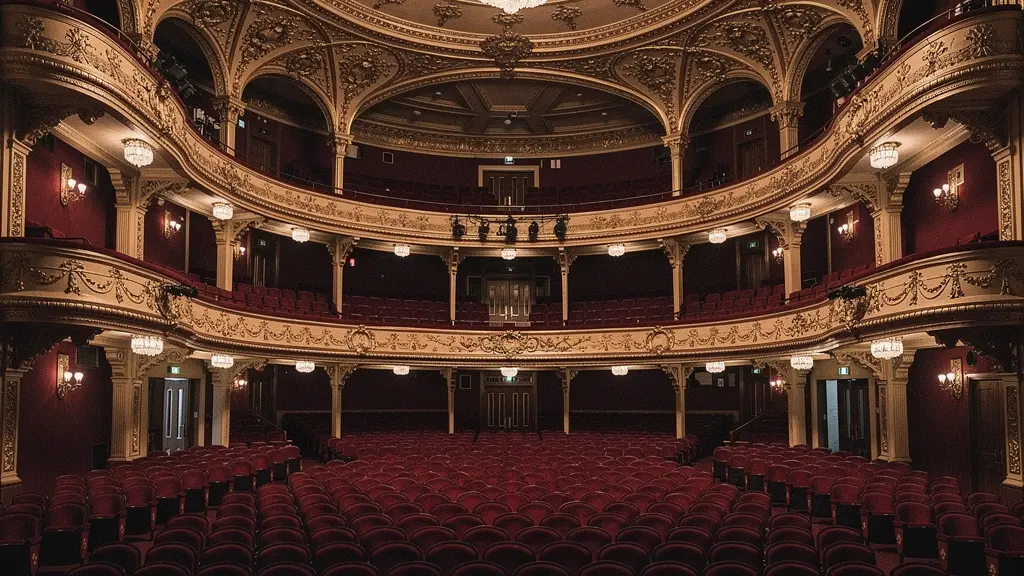
In summary:
- Victorian theatre design dictates modern comfort, from restricted views to acoustics. Understanding it is key.
- Restricted view seats can be smart bargains if you know what to look for, but pillars are not the only obstacle.
- Accessibility is a major challenge, but new builds and specific theatre efforts offer some solutions.
- High ticket prices are driven by huge running costs and the immense expense of maintaining historic listed buildings.
There’s a unique contract we sign when we book a ticket for the West End. We agree to be transported by world-class performance, but we also implicitly accept the architectural baggage that comes with it: the cramped legroom, the vertiginous upper circles, the pillars that seem strategically placed to obscure the one crucial moment of drama. We adore these gilded, velvet-draped temples of art, but our knees and necks often tell a different story. As a theatre historian and accessibility advocate, I’ve spent years loving the buildings while fighting the stairs, and I’ve learned that the two are inextricably linked.
The common advice—”check the seating plan,” “book early”—barely scratches the surface. It treats the theatre like a modern cinema, a black box where every seat is created equal. But a Victorian theatre is not a black box; it’s a complex, living machine designed for a different era’s audience and technology. The discomfort and quirks we experience today are not bugs; they are features of a 150-year-old operating system. Understanding this system is the only way to truly master it.
This isn’t a guide about simply tolerating the discomfort. It’s about outsmarting it. By applying a kind of theatrical forensics, we can learn to read the architectural DNA of a theatre to predict our experience. The key isn’t to wish these buildings were different, but to understand precisely why they are the way they are. From the science of sound in a horseshoe-shaped auditorium to the financial reality of maintaining a Grade-II listed structure, every “flaw” tells a story.
This guide will deconstruct that story, section by section. We’ll explore how to weigh the savings of a restricted view, find the acoustic sweet spot, navigate the accessibility minefield, and understand why your £150 ticket is not just paying for the actors on stage. It’s about moving from a frustrated patron to an informed one, ready to embrace the cramped, historic, and utterly magical world of the West End.
To help you navigate these historic venues, this article breaks down the key challenges and opportunities you’ll face. The following summary provides a direct path to each topic we’ll explore, from sightlines to ticket prices.
Summary: A Practical Guide to London’s Historic Theatres
- Pillar in the Way: Is a Restricted View Ticket Ever Worth the Savings?
- The Sweet Spot: Where to Sit for the Best Sound in a Victorian Theatre?
- Wheelchairs and Victorian Stairs: Which West End Theatres Are Actually Accessible?
- Haunted Backstage: Which Theatre has the Most Active Green Room Ghost?
- Air Conditioning vs History: Why Are West End Theatres So Hot in Summer?
- Why the Great Court’s Acoustics Change Your Perception of Space?
- Grade II Listed Status: Can You Change the Windows in Your Mill Apartment?
- Why Do West End Tickets Cost £150 and Where Does the Money Go?
Pillar in the Way: Is a Restricted View Ticket Ever Worth the Savings?
The “restricted view” seat is the West End’s greatest gamble. It promises a bargain but threatens to turn a spectacular musical into a radio play. The infamous pillar is the most obvious culprit, a legacy of Victorian engineering where immense weight-bearing structures were a necessity. But restrictions also come from safety rails, lighting rigs, or the overhang of the circle above. The critical question isn’t just *if* your view is blocked, but *what* it blocks. A pillar that obscures the far-left of a static, centre-stage drama is an inconvenience; one that blocks the main entrance point in a dynamic ensemble show is a disaster.
Making an informed decision requires a bit of theatrical forensics. Before you buy, research the show itself. Is it a dance-heavy spectacle with action across the entire stage? Avoid side-view seats in the upper circle. Is it a one-person show focused on a single microphone? A seat with a slight side restriction might be a steal. With over 25% of West End tickets sold for under £35, these cheaper seats provide vital access to the theatre. The gamble is only worth it, however, when it’s a calculated one.
Ultimately, a “restricted view” ticket is a trade-off. You are trading a perfect sightline for financial accessibility. The savvy theatre-goer doesn’t just look at the seating plan; they cross-reference it with the nature of the production. An obstructed view of a set piece is one thing; an obstructed view of the star performer is another entirely. This is the first step in developing your architectural empathy—understanding that the building is dictating the terms, and it’s your job to read them.
Your Pre-Booking Audit Checklist: Securing the Best Seat
- Assess the Channels: Check the official theatre website, trusted agents (like TodayTix), and the box office directly for price variations.
- Inventory Your Options: Don’t just look at one date. Compare a Tuesday evening with a Saturday matinee; pricing and availability can differ dramatically.
- Check for Coherence: Cross-reference seat reviews on sites like ‘SeatPlan’ with the official seating map. Does the “great view” review match the theatre’s premium price?
- Gauge the Emotion vs. Value: Is a front-row Stalls seat worth double the price of a front-row Dress Circle seat for this specific show? Consider the stage height and production style.
- Plan for Integration: Once you’ve chosen a seat, plan your arrival. Upper Circle seats mean many stairs; factor that into your timing.
The Sweet Spot: Where to Sit for the Best Sound in a Victorian Theatre?
While we obsess over sightlines, sound is the more subtle, and arguably more crucial, component of the theatrical experience. In a Victorian theatre, acoustic design was a science born of necessity. Before modern amplification, the building itself was the sound system. The iconic horseshoe-shaped auditoriums, with their multiple curved tiers, were not just for decoration; they were giant acoustic reflectors, designed to bounce the unamplified voice from the stage to the furthest corners of “the gods.” Plush velvet seats and heavy curtains were there to absorb stray echoes, ensuring clarity.
This historical design means the best sound is often not where you’d expect. The front rows of the stalls can sometimes be an acoustic dead zone, as sound flies over your head towards the circles. The sweet spot is frequently in the front-to-middle of the Dress Circle (or Royal Circle), where you receive a perfect blend of direct sound from the stage and reflected sound from the auditorium’s architecture. Here, you are at the focal point of the building’s intended acoustic design, experiencing the performance with the richness the original architects intended.
The introduction of electricity also played a revolutionary role. As the Savoy Theatre demonstrated when it became the first public building in the world lit entirely by electricity in 1881, removing the constant hiss and heat of gas lighting fundamentally changed the sonic environment. It created a quieter, more stable canvas for both performers and composers, a principle that still benefits audiences today.
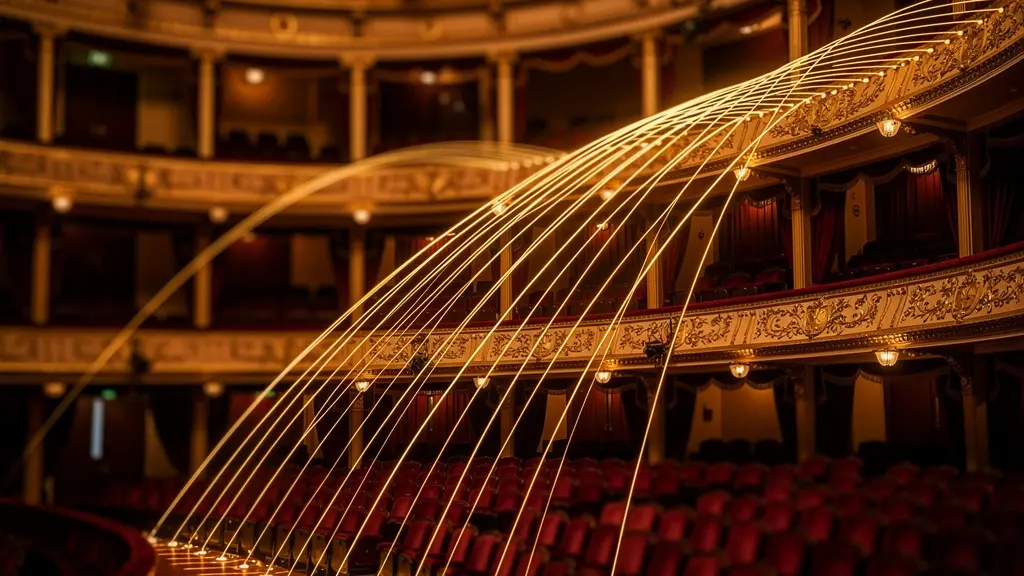
This visualization shows how sound waves travel, reflecting off the curved surfaces of the circles to reach every part of the house. Sitting in the central part of the first tier often places you in the ideal position to receive this rich, layered sound. This is a prime example of the comfort compromise in action: while the seats may be older, they are often placed in acoustically superior positions that no modern stadium-style venue can replicate.
Wheelchairs and Victorian Stairs: Which West End Theatres Are Actually Accessible?
Here we confront the West End’s most significant “comfort compromise”: physical accessibility. It is the area where the romance of history collides most painfully with modern needs and legal rights. The simple fact is that most West End theatres were built in the late 19th or early 20th centuries, an era when the concept of wheelchair access was nonexistent. The buildings were designed with grand, sweeping staircases as features, and the warren of narrow corridors and steep inclines of the upper levels are a direct product of that architectural philosophy.
For patrons with mobility issues, this translates into a minefield. While many theatres have made valiant efforts to improve access, they are constrained by their listed building status, which often prohibits major structural changes like installing lifts or widening doorways. “Level access” might only apply to a specific box or a handful of seats in the stalls, with accessible toilets located on a different floor. It requires a level of theatrical forensics far beyond checking a seating plan; it means calling the theatre’s dedicated access line, explaining your specific needs, and understanding the precise route you’ll take from the street to your seat.
However, the picture is not entirely bleak. A handful of venues, often those that have undergone major renovations or are newer, lead the way. The National Theatre, while not strictly “West End,” is a benchmark for accessibility. More recently, the arrival of @sohoplace in 2022 marked a turning point as the first newly constructed major West End theatre in over 50 years. It was designed from the ground up with 21st-century accessibility standards, proving that new development can coexist with the historic theatreland. These examples provide a blueprint for what’s possible and put pressure on older venues to find creative solutions within their historic constraints.
Haunted Backstage: Which Theatre has the Most Active Green Room Ghost?
Beyond the tangible challenges of pillars and stairs lies another layer of history: the intangible, spectral kind. Every historic theatre has its stories, but none is more famous than the Theatre Royal Drury Lane and its resident phantom, the “Man in Grey.” This figure, dressed in 18th-century attire complete with a tricorne hat and riding boots, has been sighted for generations, typically in the upper circle during matinee performances. Far from being a terrifying omen, his appearance is considered a sign of good luck for the production currently running.
What elevates this story from mere folklore to a cherished part of the theatre’s identity is the layer of historical fact that underpins it. During renovations in the 19th century, a skeleton was discovered in a walled-up cavity behind a section of the upper circle, precisely where the Man in Grey is most often seen. The skeleton had a dagger lodged in its ribs, giving sudden, grim credibility to the ghostly legend. This discovery transformed the phantom from a spooky tale into a tangible link to the building’s dramatic, and sometimes violent, past.
This isn’t just a curiosity; it speaks to the deep-seated culture of these buildings. The ghost is part of the backstage life, a colleague to the crew and a mascot for the actors. It reinforces the idea that these are not just venues but living museums, where centuries of drama, tragedy, and performance have soaked into the very walls. To be an informed patron is to appreciate not just the show on the stage, but the many other stories the building itself has to tell, both seen and unseen.
Air Conditioning vs History: Why Are West End Theatres So Hot in Summer?
The stifling heat of a West End theatre on a summer evening is a familiar ordeal for many. It feels like a simple failure of modern convenience, but the reality is a complex battle between 21st-century expectations and 19th-century infrastructure. When these venues were built, “air conditioning” was a system of passive ventilation. Ornate ceiling grilles and vents were designed to draw hot air upwards and out of the building, a clever but ultimately limited system that relied on natural airflow.
Retrofitting modern HVAC (Heating, Ventilation, and Air Conditioning) systems into these buildings is a Herculean task. The primary obstacle is, once again, their listed status. You cannot simply start tearing down ornate plasterwork or drilling through load-bearing Victorian walls to install the large ducts required for effective air conditioning. The process is fantastically expensive, logistically disruptive, and requires painstaking negotiation with heritage organizations to ensure the architectural integrity of the building is preserved.
This challenge is a perfect illustration of the “Preservation Tax”—the hidden costs associated with maintaining a historic building. As one analysis notes, the inherent conflict is almost impossible to resolve perfectly.
The protected status of the buildings and their confined urban locations, combined with financial constraints, make it very difficult to make substantial improvements to the level of comfort offered.
– Wikipedia contributors, West End theatre infrastructure analysis
This is the ultimate comfort compromise. While some theatres have managed to install modern systems during major refurbishments, many are left with partial solutions or the original passive systems. So, when you’re fanning yourself with your programme in July, you’re not just feeling the heat; you’re feeling the immense weight of architectural history and preservation law.
Why the Great Court’s Acoustics Change Your Perception of Space?
While the British Museum’s Great Court is a marvel of modern acoustics, the theatre has its own “great court”—the vast, echoing expanse of the Upper Circle, often called “the gods.” Sitting here offers a fundamentally different experience, one where acoustics dramatically alter your perception of the performance. Up in these seats, often hundreds of feet from the stage, you are at the apex of the original architect’s acoustic design. The sound that reaches you is not the direct, crisp audio heard in the stalls; it is a blend of direct sound and a multitude of reflections from the auditorium’s ceiling and walls.
This creates a more ambient, spacious soundscape. Individual voices might lose some of their sharp clarity, but the collective sound of an orchestra or a chorus can feel immense and enveloping. It’s a more “cinematic” experience, where you are observing the spectacle from a distance. The physical separation, combined with the cavernous acoustics, can create a sense of detachment, making you feel more like an observer of a grand event than a participant within it. For some, this is a drawback; for others, it provides a unique perspective, allowing them to appreciate the overall stage picture and the grand scale of the production.
The visual perspective from this “great court” also plays a role. Looking down on the stage from a steep angle flattens the perspective, turning the performers into figures on a living map. You become acutely aware of the blocking, the lighting design, and the overall geometry of the show in a way that someone in the front row cannot. This vantage point, combined with the unique acoustic properties, makes a trip to “the gods” a distinct theatrical experience, not merely a cheaper version of the one below.
Grade II Listed Status: Can You Change the Windows in Your Mill Apartment?
This question, though it refers to a mill apartment, perfectly encapsulates the central dilemma facing every West End theatre owner. The answer, in spirit, is a resounding “no.” A Grade I or Grade II listed status is a legal protection that treats a building as a piece of national heritage. It means you can’t just “change the windows,” or, in theatrical terms, you can’t just widen the aisles, add more toilets, install a lift, or replace cramped seating with modern, spacious alternatives. Every proposed alteration is subject to intense scrutiny by bodies like Historic England.
This is what I call the “Preservation Tax.” It’s a cost paid not just in money, but in comfort and convenience. The reason your legroom is measured in millimeters is that the original 1904 seating layout is often considered a protected historical feature. The reason the bar is a chaotic crush in the interval is that it’s housed in a former drawing-room whose dimensions cannot be altered. These are not failures of management; they are the direct results of a legal and cultural commitment to preserving architectural history.
The process for even a minor change is labyrinthine. It involves historical research to prove the change is necessary, architectural plans that show minimal impact on the original fabric, and a lengthy approval process. A major refurbishment that includes accessibility or comfort upgrades can take years of planning and tens of millions of pounds. This is the fundamental conflict at the heart of the West End: the buildings are both active, commercial workplaces and protected museum pieces. Every decision must serve both masters, and the audience experience is often caught in the middle.
Key Takeaways
- Your experience in a West End theatre is directly shaped by its 19th-century architecture and 21st-century preservation laws.
- High ticket prices reflect not just the cost of the show, but the immense expense of operating and maintaining a historic, listed building.
- True comfort and accessibility are a constant battle against architectural constraints, making “informed patronage” your most powerful tool.
Why Do West End Tickets Cost £150 and Where Does the Money Go?
The shock of seeing a £150 price tag for a top-tier seat is a common rite of passage for any theatre-goer. It’s easy to assume this is pure profit, but the reality of West End economics is far more complex. The “Preservation Tax” mentioned earlier is just one part of the equation. Running a major West End show is a high-risk, high-cost enterprise with staggering weekly expenses. According to a report by SOLT, weekly running costs for a large-scale musical can be between £300,000 and £400,000.
This astronomical sum covers everything from the salaries of actors, musicians, and stage crew to electricity, marketing, and the rental of the theatre itself. As a detailed breakdown shows, only a small fraction of the ticket price actually constitutes profit, which is used to recoup the initial multi-million-pound investment required to mount the show in the first place. Many shows never recoup their investment and close at a significant loss.
The following table illustrates where your money typically goes for a ticket priced at £50. While the percentages shift for a more expensive ticket, the fundamental distribution of costs remains similar, highlighting how many stakeholders are involved in every single performance.
| Cost Component | Amount | Percentage |
|---|---|---|
| Production Costs (actors, set, costumes) | £10.14 | 20.3% |
| Operational Expenses (electricity, staff) | £7.34 | 14.7% |
| Marketing & Commissions | £9.50 | 19% |
| VAT (20%) | £8.33 | 16.7% |
| Theatre Rental | £8.19 | 16.4% |
| Profit/Investment Recoupment | £6.50 | 13% |
Understanding this economic reality is the final step in becoming an informed patron. It transforms the ticket from a simple purchase into a contribution to a vast and fragile ecosystem. While it doesn’t make the price any lower, it provides context and highlights the importance of supporting theatre at all levels. Fortunately, there are ways to navigate the dynamic pricing system to find better value:
- Book Tuesday-Thursday performances instead of weekends
- Choose matinee performances over evening shows
- Clear browser cookies before searching for tickets
- Check official theatre websites before third-party sellers
- Look for preview performances in the first two weeks of a run
By understanding the architectural constraints, the historical context, and the economic realities, you can approach the West End not as a passive consumer, but as a knowledgeable enthusiast. You can appreciate the gilded proscenium arch all the more for knowing the acoustic work it’s doing, and you can select your “restricted view” seat with the strategic insight of a seasoned professional. The next step is to put this knowledge into practice on your next theatre visit.