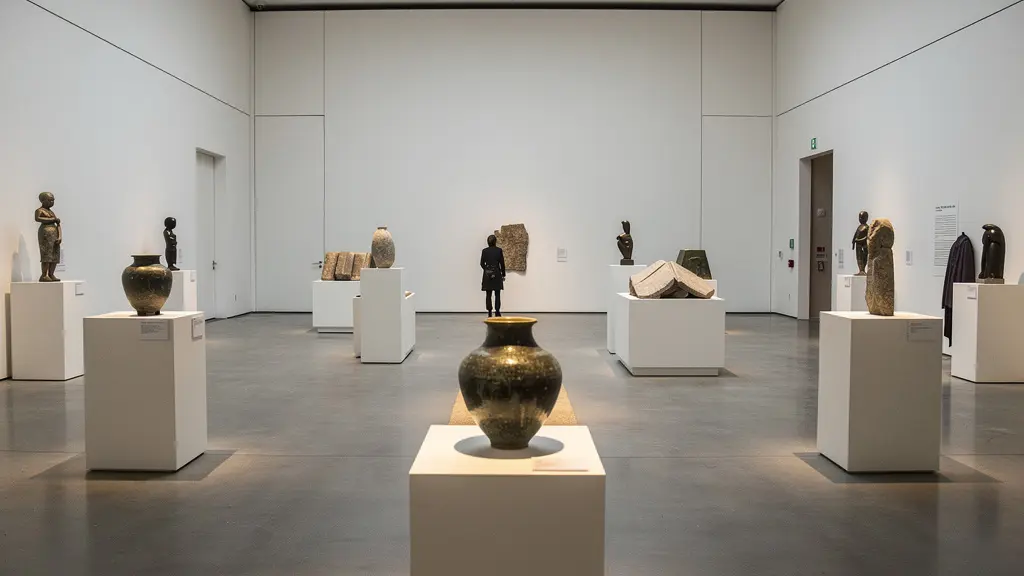
Most believe curating is about arranging valuable objects; in truth, it’s about choreographing a visitor’s psychological journey.
- The most powerful narratives are not told with text but are felt through the manipulation of space, light, and even absence.
- Technical and ethical constraints are not limitations but creative tools for building a more profound visitor experience.
Recommendation: Shift your focus from what objects *are* to what you want the visitor to *feel*, and design every element of the exhibition to serve that emotional arc.
Walk into any gallery, and you’re met with a quiet assembly of objects. A common assumption is that the curator’s job is to simply select the most important artifacts and write a few explanatory notes. Many believe the story lies within the objects themselves, waiting to be passively observed. This leads to a familiar experience: a drift from one glass case to the next, a quick scan of a dense text panel, and a feeling of vague, dutiful appreciation. We are told to look for historical timelines or stylistic groupings, but this is only the most superficial layer of the curatorial process.
But what if the real narrative isn’t in the objects, but in the spaces between them? What if the most compelling stories are told not with words, but with light, shadow, and sightlines? The true art of curation is not one of collection, but of connection. It is a practice rooted in visitor psychology, an orchestration of attention and emotion. It moves beyond simply presenting artifacts to actively sculpting an experience. The curator works as a storyteller whose medium is the gallery itself, turning a passive viewing into an active, memorable journey.
This is where the real craft lies: in understanding the invisible forces that guide a visitor’s eye, body, and mind. It’s the difference between a room full of things and an immersive narrative that resonates long after the visit. This article will guide you through the core tensions and techniques a senior curator uses to transform disconnected artifacts into a compelling story. We will deconstruct the subtle decisions that shape your experience, from the length of a wall text to the strategic emptiness of a pedestal.
To navigate this behind-the-scenes exploration, the following guide breaks down the essential elements of narrative curation. Each section addresses a critical question that every curator must answer to build a powerful and coherent exhibition.
Summary: The Curator’s Craft: Weaving Stories from Silent Objects
- Wall Text Length: When Does Too Much Information Kill the Visual Experience?
- Repatriation Debates: How Museums Address Contested Heritage in Displays?
- Spotlight vs Ambient: Which Lighting Strategy Protects Watercolors Best?
- The Tension Between Artist Vision and Institutional Safety Regulations
- Virtual Tours: Do They Increase or Decrease Physical Footfall?
- Spatial Storytelling: How to Guide a Visitor Without Signs or Maps?
- Touch Screens or Real Objects: Which Creates a Better Memory of the Visit?
- How to Write Museum Labels That People Actually Read?
Wall Text Length: When Does Too Much Information Kill the Visual Experience?
The impulse to explain is a powerful one for any curator. We want to share the deep, fascinating history of an object. Yet, the greatest enemy of looking is often reading. A visitor buried in a long text panel has their back to the art. This is the first and most common point of narrative friction: the tension between information and experience. The goal is not to create a textbook on a wall but to choreograph attention. The text should be a catalyst for observation, not a substitute for it. It should offer just enough to ignite curiosity and send the visitor’s eyes back to the object with a new line of inquiry.
The key is to understand the different roles text plays. An introductory panel can set a broader scene, but even these should be concise. Visitor studies show that attention spans are limited, and engagement drops off sharply after a certain point. The optimal length is a strategic decision. For instance, research suggests a range of 150-250 words for main panels and a much tighter 50-75 words for individual object labels. This brevity is not about “dumbing down” the content; it’s about respecting the gallery as a visual, spatial medium.
Each word must earn its place. A successful label provides a hook, a piece of essential context, and then gets out of the way. It empowers the visitor by giving them a new lens through which to see, rather than telling them everything they are supposed to think. The silence that follows the reading, as the gaze returns to the artifact, is where the real connection happens. The text is the question; the object is the answer. Over-explaining kills this dialogue before it can even begin.
Ultimately, a curator must trust the object. By providing minimal, potent text, we demonstrate confidence in the artifact’s own power to communicate and in the visitor’s ability to perceive it.
Repatriation Debates: How Museums Address Contested Heritage in Displays?
A museum is not a neutral space. The objects within it are entangled with complex histories of power, colonialism, and acquisition. The growing debate around repatriation and the return of contested heritage is one of the most significant ethical and narrative challenges for curators today. How do we tell a story when a key object is, or should be, missing? The answer is to embrace the absence and make it part of the narrative. An empty space can speak more powerfully than a full one.
Progressive institutions now see repatriation not as a loss, but as a crucial act of narrative correction and relationship-building. It is a chance to tell a more honest, multi-vocal story. A prime example is the repatriation of a sacred totem pole by Harvard’s Peabody Museum to the Gitxaała Nation. The museum didn’t simply remove the object; they worked collaboratively with the community, acknowledging the coercive history of its removal and facilitating its rightful return. This process itself becomes a new, vital story for the museum to share, shifting the focus from possession to partnership.
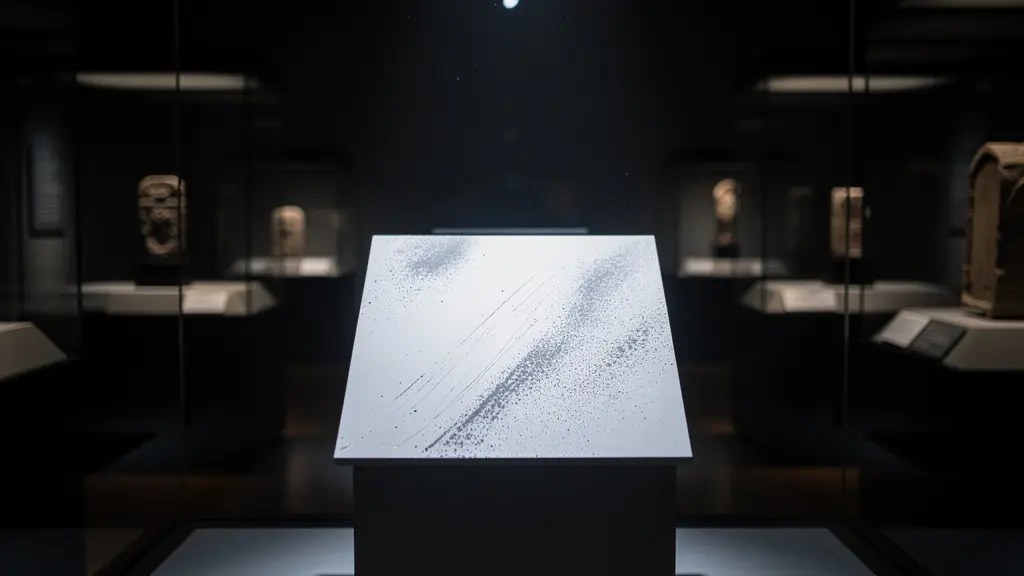
This approach transforms a potential moment of conflict into one of profound narrative depth. The empty pedestal, as shown above, becomes a symbolic monument. It prompts questions about provenance, ownership, and the very definition of a museum’s role. Instead of hiding these difficult conversations, the curator can use the space to foreground them. The story is no longer just “this is a totem pole”; it becomes “this is where a sacred totem pole once stood, and here is the story of its journey home.”
By narrating the absence, the museum moves from being a silent holder of objects to an active participant in a global dialogue about cultural justice, transforming its galleries into forums for reflection and reconciliation.
Spotlight vs Ambient: Which Lighting Strategy Protects Watercolors Best?
Lighting in a museum serves two masters who are often at odds: presentation and preservation. While a dramatic spotlight can make an object sing, it can also cause irreparable damage, especially to light-sensitive materials like watercolors, textiles, and manuscripts. The curator’s task is to navigate this tension, using light as a narrative tool while adhering to strict conservation standards. For the most fragile pieces, the rule is clear: conservation guidelines recommend a maximum of 50 lux—a level of light so low it can feel almost dim.
This constraint, however, is not a creative dead end. It is a powerful narrative device. A shift from a brightly lit space into a low-lit gallery for watercolors immediately signals to the visitor that they are entering a different, more intimate zone. The low light demands closer looking and creates a sense of reverence. The limitation itself becomes part of the storytelling, communicating the preciousness and fragility of the objects on display. The curator is not just lighting an object; they are sculpting the visitor’s emotional response.
Beyond conservation, light is the primary tool for non-verbal guidance in a gallery. It creates pathways, establishes rhythm, and directs the eye. A curator can use a sequence of lighting to build a narrative arc: warm, soft light for historical or personal items to evoke nostalgia; crisp, cool light for contemporary works to feel modern and analytical. A single, focused spotlight in a generally ambient room acts as an exclamation point, drawing every eye to a climactic piece. Lighting is the curator’s paintbrush, used to highlight, conceal, and set the emotional tone of the entire exhibition.
Thus, the technical challenge of protecting a watercolor from fading becomes an opportunity to create a moment of quiet contemplation, proving that the best curatorial solutions often arise from embracing constraints.
The Tension Between Artist Vision and Institutional Safety Regulations
Few things seem more antithetical to the free spirit of art than a velvet rope and a “Please Do Not Touch” sign. For both the artist and the curator, institutional requirements for safety and security can feel like a frustrating imposition. They introduce a physical and psychological barrier between the viewer and the artwork. An artist might envision their sculpture being touched, or an installation being walked through, but the realities of insurance, conservation, and public safety often make this impossible. This tension is a central, unavoidable part of curating.
A skilled curator, however, learns to see these barriers not as obstacles, but as part of the framing device. The challenge is to integrate them so seamlessly into the exhibition design that they enhance, rather than detract from, the narrative. The placement of a stanchion, the material of a barrier, the wording of a sign—all these elements can be designed with intent. They can be made to feel like a deliberate part of the aesthetic, a respectful perimeter that sacralizes the object rather than just cordoning it off.
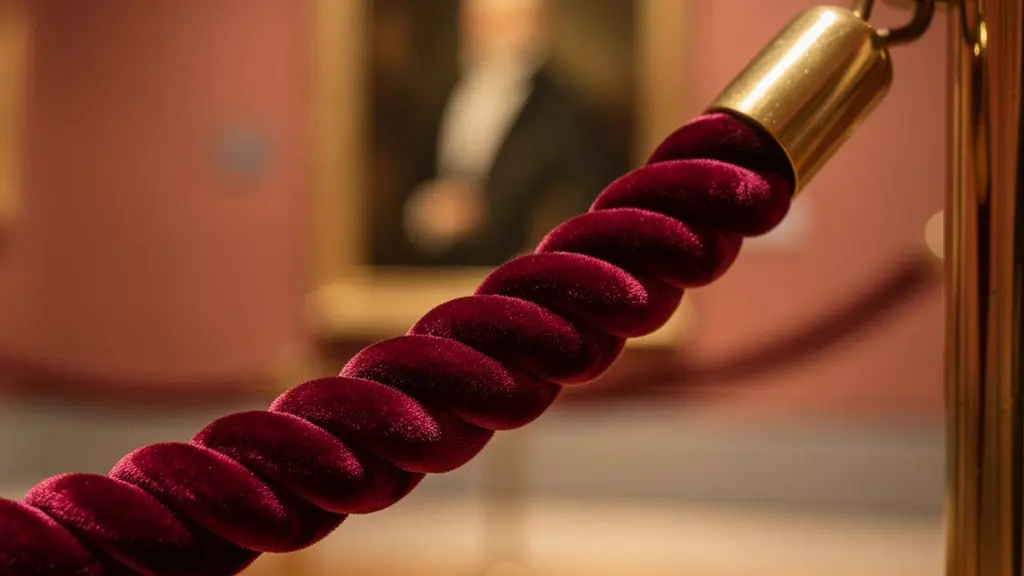
Think of the classic museum velvet rope. Its plush texture and gleaming brass posts are a cultural signifier of value and importance. As shown in the image, its elegant curve can act as a leading line, directing the viewer’s gaze toward the artwork. The barrier becomes an extension of the pedestal or frame, defining the personal space of the object and heightening the sense of its unique presence—its “aura.” The curator’s job is to negotiate with the artist and the institution to find solutions that satisfy safety protocols without sacrificing narrative integrity.
Ultimately, these regulations force a curator to be more creative, turning a mundane requirement into a subtle but effective part of the spatial storytelling, reminding the viewer that they are in the presence of something precious.
Virtual Tours: Do They Increase or Decrease Physical Footfall?
The rise of high-resolution digital archives and immersive virtual tours has sparked a significant debate in the museum world: does providing digital access cannibalize physical attendance? The fear is that if someone can see the entire collection from their couch, they will have no reason to visit in person. However, emerging data and a deeper understanding of visitor psychology suggest the opposite is true. The digital experience is not a replacement for the physical one; it is an advertisement for it.
Recent studies show a positive correlation between robust digital engagement and in-person visits. In the post-pandemic landscape, many museums with strong online offerings saw a 15-20% increase in physical footfall compared to their pre-digital baselines. The virtual tour acts as a powerful planning tool and a teaser. It lowers the barrier to entry, allowing potential visitors to explore the museum’s offerings, identify “must-see” objects, and build anticipation for the real thing. It transforms a vague interest into a concrete intention to visit.
The key is understanding the fundamental differences between the two experiences, which a curator must leverage. A virtual tour offers unparalleled accessibility, but it can never replicate the multi-sensory engagement and the authentic “aura” of a physical visit.
| Aspect | Virtual Tour | Physical Visit |
|---|---|---|
| Accessibility | Global reach, 24/7 availability | Limited by location and hours |
| Narrative Control | User-driven, non-linear exploration | Curator-guided pathway |
| Sensory Experience | Visual and audio only | Full multi-sensory engagement |
| Object Presence | Digital reproduction | Authentic ‘aura’ of original |
| Social Interaction | Limited to comments/shares | Shared physical presence |
This table highlights that the two formats serve different purposes. The curator’s strategy should be to use the virtual tour to ignite curiosity about the very things it cannot deliver: the texture of a canvas, the sheer scale of a sculpture, the shared hush of a gallery. The digital is the trailer; the physical museum is the main event.
By treating the digital and physical as complementary parts of a single ecosystem, curators can expand their reach and create a deeper, more lasting desire for the irreplaceable magic of the real object.
Spatial Storytelling: How to Guide a Visitor Without Signs or Maps?
The most elegant exhibition is one where the visitor feels they are exploring freely, yet is being gently and invisibly guided along a carefully constructed narrative path. This is the art of spatial storytelling: using architecture, sightlines, and object placement to choreograph movement and build a story in three dimensions. It’s about trading overt instructions (“Go Here Next”) for intuitive nudges that make the curator’s intended path feel like a natural journey of discovery.
One of the most powerful techniques is the use of what designers call a “prospect.” As exhibition design experts from Art Business News note, “Curators create intuitive paths by strategically placing a visually compelling ‘prospect’ at the end of a sightline, drawing visitors forward naturally.” This could be a large, dramatically lit sculpture visible from the gallery entrance, or a brightly colored painting glimpsed through a doorway. The prospect acts as a visual magnet, pulling the visitor through the space from one narrative chapter to the next.
Curators create intuitive paths by strategically placing a visually compelling ‘prospect’ at the end of a sightline, drawing visitors forward naturally.
– Exhibition design experts, Art Business News
This choreography relies on fundamental principles of human perception, often borrowed from Gestalt psychology. The curator can group related objects in close proximity to imply a thematic link, or create a visual rhythm by arranging items with similar colors or shapes. The very architecture of the space becomes a narrative tool. A wide-open gallery encourages free roaming, while a series of smaller, interconnected rooms creates a more linear, chapter-by-chapter experience. Changing floor textures, lowering a ceiling, or using directional soundscapes can all signal a “threshold,” marking the transition from one part of the story to another.
By mastering this psychogeography of the gallery, the curator can tell a story with the space itself, creating a flow so natural that the visitor absorbs the narrative without ever realizing they are being led.
Key Takeaways
- Narrative Power of Absence: An empty pedestal or a returned artifact can tell a more potent story about ethics and history than the object itself.
- Constraints as Creative Fuel: Safety regulations, conservation lighting limits, and wall text lengths are not obstacles but catalysts for more inventive, meaningful curatorial solutions.
- Digital as Appetizer, Not Main Course: Virtual tours build anticipation and desire for the irreplaceable “aura” and multi-sensory experience of a physical visit, ultimately driving footfall.
Touch Screens or Real Objects: Which Creates a Better Memory of the Visit?
In our digitally saturated world, the temptation to supplement every exhibit with a touch screen is immense. They offer a seemingly endless capacity for information, from artist interviews to 3D models. Yet, this raises a fundamental question for the curator: what experience are we trying to create? Is it one of information retrieval or one of memorable encounter? The answer has profound implications for how a visitor connects with and remembers the exhibition.
Cognitive science provides a compelling answer. Research demonstrates that our interaction with the physical world creates deeper and more lasting memories. Specifically, physical object interaction creates over 40% stronger episodic memory formation than engaging with digital interfaces. When we stand before a real object, we are engaged in a full-bodied, multi-sensory experience. We perceive its scale relative to our own body, the way light plays across its surface, its subtle textures, and even the specific quality of the air in the room. This rich sensory data is what forges a strong, personal memory of the moment.
This phenomenon is tied to what the philosopher Walter Benjamin famously termed the “aura” of the artwork: its unique presence in time and space, its history, its authenticity. A digital reproduction on a screen can provide facts *about* the object, but it can never transmit the experience of its aura. The real object’s power is that it is singular and un-reproducible. As one analysis of the theory states, the touch screen can provide information about the aura, but it can never replace the memory of experiencing it directly. A touch screen informs; an object transforms.
The real object’s narrative power lies in its unique, un-reproducible presence and history—its ‘aura.’ A touch screen can provide information about the aura but can never replace the memory of experiencing it directly.
– Walter Benjamin’s theory, Referenced in contemporary museum studies
Therefore, the curator’s role is not to replace the object with information, but to use minimal, effective tools to enhance the visitor’s encounter with the authentic object. The goal is a memory, not just a fact sheet.
How to Write Museum Labels That People Actually Read?
After exploring the grand narratives of space and light, we arrive at the most intimate and challenging form of curatorial storytelling: the museum label. This is where the visitor’s attention is most focused, and most easily lost. We’ve all seen it: the visitor who leans in, squints, reads the first sentence, and then moves on. The battle for engagement is won or lost in these few square inches. So, how do you write a label that not only gets read but actually enhances the viewing experience?
First, we must acknowledge the physical act of reading in a gallery. People are standing, often in low light, and their eyes are already tired. Readability is paramount. Simple formatting choices have a huge impact. For example, eye-tracking studies reveal that a line length of 45-75 characters optimizes reading comprehension and reduces fatigue. Using an accessible font size and a clear, active voice in the present tense also creates a sense of immediacy that pulls the reader in. It’s not about simplifying the idea, but simplifying the delivery.
More importantly, a great label isn’t an encyclopedia entry; it’s a micro-story. It should follow a narrative structure designed to hook the reader, provide context, and provoke further looking. This “three-act structure” is a powerful tool for turning passive readers into active observers. The goal is to give the visitor a specific “job” to do—a detail to find, a contradiction to ponder, a connection to make—that sends them back to the artwork with purpose.
Action Plan: The Three-Act Structure for Engaging Labels
- Act 1 – The Hook: Start with a provocative question, a surprising fact, or an unexpected detail about the object to instantly capture attention and create intrigue.
- Act 2 – The Context: Provide the most essential “need-to-know” information in clear, accessible language. Avoid jargon and focus on the story behind the object’s creation or use.
- Act 3 – The Kicker: End with a thought-provoking connection, a lingering question, or a prompt that encourages the visitor to look closer and form their own interpretation.
- Voice and Tone: Write in an active voice and, where possible, the present tense to make the story feel immediate and alive. Aim for a 7th-10th grade reading level to ensure broad accessibility.
- Review and Refine: Read the label aloud. Does it flow well? Is every word necessary? Does it inspire you to turn back to the artwork?
By treating each label as a miniature narrative, a curator does more than just inform; they provide a key that unlocks a deeper, more personal engagement with the object, ensuring the story continues long after the text is finished.