Visual Arts
Visual arts encompass an extraordinary range of creative expression, from the intimacy of a portrait to the monumental scale of public sculpture, from the gestural freedom of abstract expressionism to the intellectual rigor of conceptual installation. For anyone stepping into this world—whether as a curious observer, aspiring collector, or emerging practitioner—the landscape can feel simultaneously exhilarating and overwhelming. The boundaries between disciplines blur, traditional hierarchies are questioned, and new forms emerge constantly.
This complexity, however, shouldn’t discourage exploration. Understanding the fundamental movements, recognizing quality across different mediums, and grasping how the art ecosystem functions are skills anyone can develop. This resource provides a comprehensive foundation, connecting the historical threads that shaped contemporary practice with the practical knowledge needed to engage confidently with visual arts today.
Understanding the Contemporary Visual Arts Landscape
The visual arts field has expanded dramatically beyond traditional painting and sculpture. Today’s artistic production includes video installations, performance documentation, digital creations, ephemeral interventions, and hybrid forms that defy simple categorization. This evolution reflects both technological advancement and conceptual shifts in how artists approach their work.
Traditional vs Contemporary Approaches
The distinction between traditional and contemporary isn’t simply chronological—it reflects fundamental differences in methodology and intent. Traditional approaches often prioritize technical mastery, observable skill, and established aesthetic criteria. A classically trained figurative painter spends years studying anatomy, understanding light behavior on form, and developing brushwork control.
Contemporary practice, conversely, frequently elevates concept over craft, questions the artwork’s materiality, and challenges viewer expectations. An artist might present an empty room with subtle sound interventions, or documentation of an action that occurred elsewhere. Neither approach is inherently superior; they serve different artistic intentions and engage audiences through distinct mechanisms.
Evaluating Quality and Authenticity
One of the most common anxieties when encountering visual arts is the question: “How do I know if this is actually good?” In traditional mediums, quality indicators are relatively accessible—compositional sophistication, technical execution, color harmony, and emotional resonance provide tangible assessment criteria.
With non-traditional mediums, evaluation becomes more nuanced. Consider these essential questions:
- Does the work demonstrate conceptual coherence between idea and execution?
- Has the artist engaged deeply with their chosen medium’s possibilities and limitations?
- Does the piece create genuine intellectual or emotional engagement, or does it rely on shock value alone?
- Is there evidence of artistic risk-taking and experimentation rather than repetition of established formulas?
Distinguishing innovation from pretension requires exposure and critical thinking. Authentic experimental work reveals layers of meaning upon repeated viewing, while purely provocative pieces often exhaust their impact quickly.
Major Movements Shaping Visual Arts
Contemporary visual arts didn’t emerge in a vacuum. Understanding the major movements provides essential context for navigating current production and recognizing the dialogues artists engage with—whether affirming, questioning, or subverting established traditions.
Abstract and Non-Objective Art
Abstract art liberates visual elements—color, form, line, texture—from representational duty, allowing them to function as the primary subject. This movement, which revolutionized early 20th-century practice, remains profoundly influential. Abstract expressionism emphasized gestural freedom and emotional directness, creating large-scale works where the painting process itself became visible and meaningful.
Color theory plays a fundamental role in abstraction. Artists manipulate hue relationships, saturation levels, and tonal contrasts to evoke specific psychological responses. A vibrant red-orange combination generates energy and warmth, while cool blues and greens suggest contemplation or melancholy. The importance of scale in abstract work cannot be overstated—a composition that feels dynamic at museum scale may lose impact when reduced to domestic proportions.
When displaying abstract art in interior spaces, consider the work’s energy level. Highly gestural, vibrant pieces command attention and suit spaces designed for stimulation, while subtle, contemplative abstractions enhance environments intended for focus or relaxation.
Figurative and Portrait Traditions
Despite predictions of its obsolescence, figurative painting has experienced a remarkable resurgence. Contemporary practitioners approach the human form with fresh perspectives, often mixing photorealistic technique with abstracted backgrounds or surreal elements. This hybrid approach acknowledges both classical training and contemporary conceptual concerns.
Portrait painting raises unique challenges. The “uncanny valley” phenomenon—where near-perfect realism triggers discomfort rather than recognition—affects painted portraits as much as digital renderings. Skilled portraitists navigate this by incorporating selective exaggeration or abstraction, capturing essential character rather than photographic accuracy.
The “female gaze” in contemporary figurative work has shifted how bodies are represented. Rather than positioning subjects as passive objects for viewing, many artists now portray figures with agency, complexity, and psychological depth. Commissioning a portrait today involves collaborative dialogue about representation, context, and the relationship between artist and subject.
Expressionism and Emotional Immediacy
Expressionist practice channels raw emotion directly onto the surface, prioritizing visceral impact over refined finish. This approach manifests through gesture painting—where physical movement translates into visible marks—and bold color application that bypasses naturalistic representation.
The psychology behind gesture painting is fascinating. Unrestricted mark-making can access emotional states that deliberate, controlled technique might suppress. Artists working expressively often describe entering flow states where conscious decision-making recedes, allowing intuitive responses to emerge.
Color psychology in expressionism differs from its use in abstraction. Rather than constructing harmonic relationships, expressionists deploy color for emotional punch—acidic greens suggesting unease, violent reds conveying rage, or somber earth tones evoking grief. The key distinction between art therapy and fine art expressionism lies in intention: therapeutic practice prioritizes the maker’s emotional release, while fine art expressionism communicates experience to an audience.
Conceptual and Installation Practices
Conceptual art positions the idea as the artwork’s primary component, with physical manifestation serving as documentation or evidence rather than the art object itself. This approach, which emerged as a radical challenge to art-as-commodity, continues to generate both fascinating work and heated debate.
Engaging with difficult or avant-garde art requires patience and openness. Some conceptual work demands active participation—viewers might need to interact with elements, follow instructions, or contribute their own responses. Other pieces operate through subtlety, requiring sustained attention to perceive their nuances.
The durability of ephemeral concepts presents an interesting paradox. Performance art, temporal installations, and interventions designed to decay or disappear can achieve lasting cultural impact through documentation, despite—or perhaps because of—their impermanence. The history of shock value in art demonstrates how provocative gestures often lose their power once absorbed into the mainstream, while genuinely innovative conceptual work maintains relevance.
Sculpture and Three-Dimensional Work
Sculpture’s interaction with space—whether gallery, public plaza, or natural landscape—creates unique viewing dynamics. Unlike painting’s fixed viewing plane, three-dimensional work reveals different perspectives as viewers move around it, creating multiple experiential moments within a single piece.
Public sculpture faces specific challenges around material durability. Outdoor settings expose work to weathering, temperature fluctuation, and potential vandalism, requiring careful material selection. Bronze weathers beautifully, developing rich patinas over time, while certain steels rust intentionally as part of the aesthetic. Contemporary practice has largely moved away from commemorative statues toward abstract forms, interactive elements, or conceptual interventions that invite participation rather than passive reverence.
Sculpture parks offer ideal environments for experiencing large-scale work. The interplay between natural landscape and human-made form, the way scale and perspective shift as visitors walk the grounds, and the opportunity to experience multiple artists’ visions within a cohesive setting make these spaces invaluable. Kinetic sculpture introduces temporal elements—movement powered by wind, water, motors, or viewer interaction—adding performance aspects to sculptural experience.
Navigating the Art Market
Understanding the commercial ecosystem surrounding visual arts enhances engagement, whether you’re considering a first purchase or simply curious about valuation mechanisms and market dynamics.
Primary and Secondary Markets
The primary market involves purchasing work directly from artists or their representing galleries—essentially the first sale. Prices here reflect the artist’s current market position, gallery overhead, and perceived trajectory. The secondary market encompasses resales through auction houses, secondary dealers, or private transactions, where values fluctuate based on demand, rarity, and the artist’s evolving reputation.
Art fairs serve as crucial marketplaces where galleries present their artists to international collectors, curators, and fellow dealers. These events compress enormous commercial activity into brief periods, creating both opportunities and pressures. For emerging artists, fair exposure can dramatically accelerate career development, though the financial risk for galleries is substantial.
Collecting and Investing Considerations
Art collecting during economic uncertainty follows different logic than traditional investment vehicles. While blue-chip works by established artists can hold value remarkably well, the market for emerging artists becomes more volatile. Speculation on emerging talent requires not just financial resources but significant knowledge and access.
Before acquiring work, prudent buyers conduct thorough due diligence:
- Verify provenance and authenticity through documentation
- Understand condition reports and any conservation needs
- Calculate total costs including auction house fees (often 25% or more), shipping, and insurance
- Arrange appropriate storage and insurance before acquisition
- Research the artist’s market history and institutional validation
Storage and insurance logistics deserve careful attention. Proper climate control, security, and handling procedures protect both physical condition and long-term value. Specialist fine art insurance policies cover risks standard homeowner policies exclude.
The Role of Immersive and Interactive Experiences
Contemporary visual arts increasingly embrace immersive environments that surround viewers rather than presenting objects for contemplation. These experiences range from carefully choreographed installations designed to evoke specific psychological states to participatory works that require audience activation.
The psychology behind immersive design often involves creating spaces where visitors lose normal spatial and temporal awareness—becoming “lost” in the artwork. This can occur through sensory saturation, spatial disorientation, or narrative progression through connected rooms. However, sensory overload risks exist; overwhelming stimuli can trigger anxiety or disengagement rather than the intended absorption.
Sound integration techniques have become sophisticated tools for shaping immersive experiences. Ambient soundscapes, directional audio, or reactive sound elements responding to viewer presence create layered sensory environments. Social media’s impact on installation design has been profound—many artists now consider how spaces will photograph and share, sometimes incorporating this consideration into the work’s concept rather than resisting it.
The distinction between passive and active participation matters significantly. Some immersive works function best when viewers move through spaces contemplatively, absorbing carefully constructed atmospheres. Others depend on direct interaction—touching, rearranging, contributing content—to complete their meaning. Understanding which mode an artwork requires enhances the experience substantially.
Regional Considerations: The British Visual Arts Context
While visual arts operate globally, regional scenes develop distinct characteristics. The British art world, particularly following the Young British Artists phenomenon, established a specific identity combining conceptual rigor with provocative irreverence. This legacy continues influencing current production, though the scene has evolved considerably.
Regional art hubs outside London—cities like Glasgow, Manchester, Liverpool, and Bristol—have developed vibrant communities with distinct flavors. These centers often offer more affordable studio spaces and living costs, attracting artists seeking alternatives to capital city pressures. The influence of British art schools remains significant, with many institutions maintaining strong international reputations for nurturing experimental practice.
Funding cuts have affected artistic output and institutional programming, creating ongoing tensions around accessibility, artist support, and exhibition opportunities. Simultaneously, increased attention to diversity and representation in UK institutions has prompted important conversations about whose stories get told and whose aesthetics receive validation. Exporting British art to global audiences continues through international fairs, biennials, and institutional exhibitions, maintaining the UK’s profile within the contemporary art ecosystem.
Visual arts offer endlessly rewarding engagement for those willing to look closely, think critically, and remain open to unfamiliar forms of expression. Whether you’re drawn to the emotional directness of expressionist painting, the intellectual challenges of conceptual work, or the physical presence of sculpture, developing your understanding enhances every encounter. The most important tool isn’t specialized knowledge—it’s genuine curiosity paired with patience to let works reveal themselves over time.
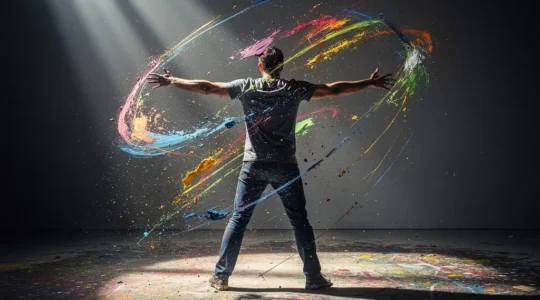
How to Access Pure Expressionism to Overcome Creative Block?
Creative block isn’t a lack of ideas; it’s a disconnection between your mind and body. The solution isn’t to think harder, but to feel more deeply. Pure expressionism is a physical process that translates your body’s internal sensations directly onto…
Read more
Why Is Figurative Realism Making a Comeback in the Digital Age?
The return of figurative art isn’t about rejecting modernism; it’s a deeply human response to our screen-saturated lives, seeking authenticity that algorithms can’t replicate. Contemporary painters are not just copying reality but are exploring emotional truth, reclaiming the body, and…
Read more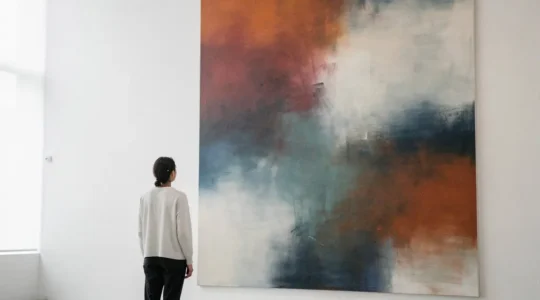
How to Read the Emotional Language of Abstract Painting?
Contrary to popular belief, understanding abstract art isn’t about decoding a secret language of symbols; it’s about tuning into your own body’s response. Artists use color, texture, and scale as physical tools to create a direct psychological and even physiological…
Read more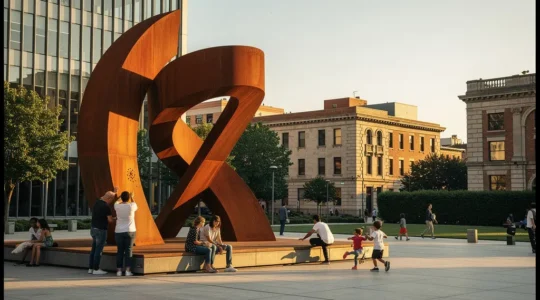
How Contemporary Sculpture Redefines Public Interaction in Urban Plazas?
Public art is not just for looking at; it’s a functional tool for choreographing human behavior and rewriting the spatial grammar of our cities. The choice of material (like Corten steel) dictates a sculpture’s dialogue with time and invites specific…
Read more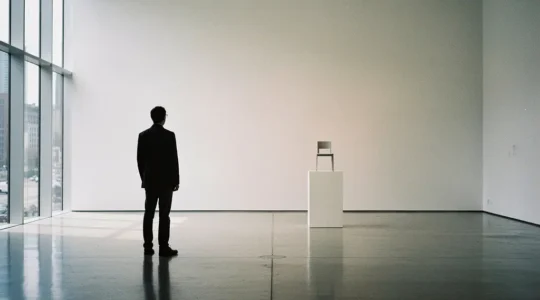
How to Look at Conceptual Art Without Feeling Insecure
Contrary to popular belief, you don’t need an art history degree to ‘get’ conceptual art; you just need to change the question you’re asking. The artwork’s value isn’t in the physical object, but in the chain of ideas it triggers….
Read more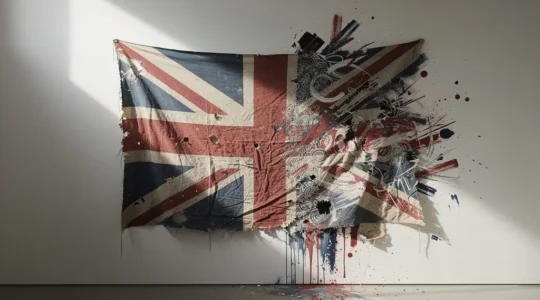
Fractured Nation: How Brexit Redefined the Themes of Young British Artists
Brexit’s true impact on British art isn’t just political subject matter; it’s a fundamental shift in artistic language, creating a new, raw aesthetic of decay and bureaucracy. Artists now use fragmentation and mundane materials not just as a theme, but…
Read more
Why Contemporary Art Confuses Traditional Collectors and How to Approach It?
The belief that you need a special kind of intellect to ‘get’ contemporary art is a myth; you actually need a practical toolkit of valuation criteria. Authentic conceptual art has “conceptual craftsmanship”—the idea and its physical form are perfectly aligned….
Read more