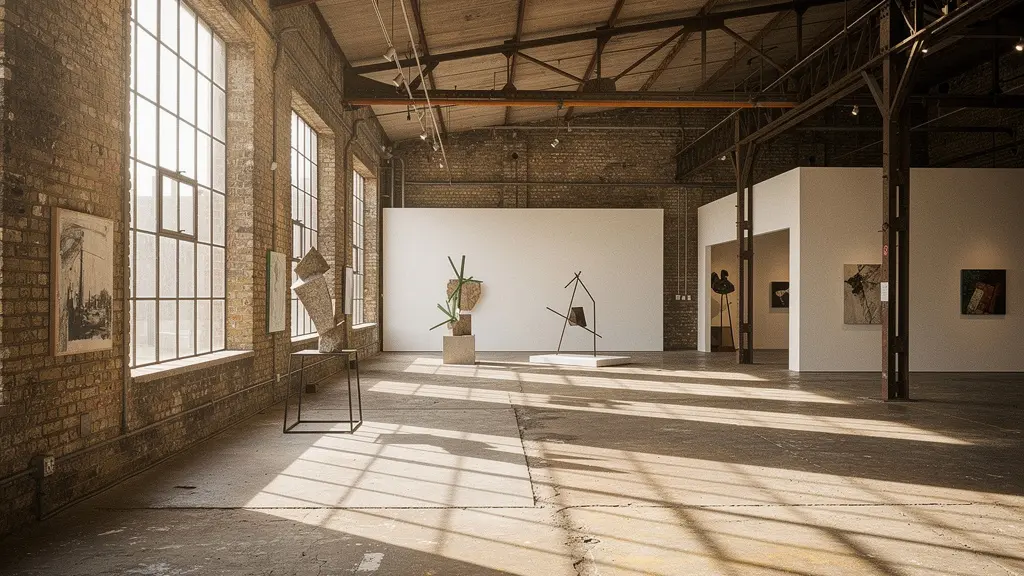
Tired of blockbuster queues and commercialised ‘street art’? The key to London’s real art scene isn’t a secret map, but mastering the city’s hidden cultural systems.
- Authentic discovery relies on strategic timing for events like First Thursdays, not just showing up.
- A sub-£500 budget is viable at art fairs, but only if you know the difference between gallery-led and artist-direct models.
- The city’s creative energy has migrated from gentrified hubs like Shoreditch to outer zones like Walthamstow.
Recommendation: Shift from being a passive spectator to an active urban explorer by learning to decode the city’s artistic geography and unwritten rules.
You see the poster on the Tube again. Another blockbuster exhibition, another pre-booking frenzy, another queue snaking around the block. There’s a nagging feeling, a sense of cultural fatigue. You’ve done the Tates, wandered the National Gallery, and even dutifully trawled through Shoreditch, which now feels more like an open-air shopping mall than a hub of rebellion. The mainstream art world, for all its gloss, can feel sterile. The “alternative” scene, meanwhile, often feels like it’s been packaged and sold back to you.
This is a common frustration for anyone living in London who craves a more authentic, gritty connection with art. The city’s creative pulse is wild and decentralized, but most guides only point you towards the most obvious, well-trodden paths. They tell you *where* to go, but not *how* to navigate the scene like an insider. They list galleries but don’t explain the crucial difference in atmosphere between a minimalist “white cube” and a repurposed warehouse.
But what if the real key wasn’t about discovering a few secret addresses, but about understanding the underlying systems? The truth is, London’s underground art scene operates on a series of codes: a rhythm of monthly events, a geography of gentrification and migration, and a financial reality that separates artist-led passion projects from high-gloss commercial ventures. Mastering these systems is what separates the tourist from the true urban explorer.
This guide is designed to give you that mastery. We’ll deconstruct the logistics of a successful art crawl, compare the city’s art fairs from a budget-conscious perspective, and track the real epicentres of street art as they shift across the capital. Forget just looking at art; it’s time to learn how to find its heartbeat.
To help you navigate this world, this article breaks down the essential strategies and locations. The following summary outlines the key areas we will explore, providing a roadmap to your next artistic discovery.
Summary: A Strategic Guide to London’s Alternative Art World
- First Thursdays in East London: How to Plan a Route That Actually Works?
- The Affordable Art Fair vs The Other Art Fair: Which Suits a £500 Budget?
- Shoreditch is Over: Where is the Real Street Art Moving to Now?
- How to See World-Class Art in London for £0 Every Weekend?
- Why the White Cube Experience Feels Colder Than the National Portrait Gallery?
- Graffiti vs Muralism: Who Owns the Walls of the Northern Quarter?
- Pop-Up Parks: Why Temporary Installations Often Have More Impact Than Permanent Ones?
- How Manchester’s Architecture Blends Victorian Red Brick With Modern Glass?
First Thursdays in East London: How to Plan a Route That Actually Works?
The first Thursday of the month is a legendary date in London’s art calendar. The concept is a beautiful chaos: a coordinated late-night opening of galleries across East London, often with free drinks and a buzzing social atmosphere. However, for the unprepared, it can be an overwhelming and fruitless wander. With over 150 galleries and museums in East London participating, simply “showing up” is a recipe for seeing very little.
A successful First Thursday is not spontaneous; it’s a tactical operation. The goal isn’t to see everything, but to curate a tight, geographically logical route that hits 3-4 key spaces. Start by checking the official Whitechapel Gallery First Thursdays website a week in advance. They publish walking routes and a “Top 5” list which serves as an excellent curatorial filter. This saves you from trekking to a gallery only to find its private view was an hour ago.
For those who prefer a guided experience, the free Art Bus Tour is an essential tool, but booking is critical. A smart move is to build a hybrid evening: book the bus tour to cover a wider area, then break off to explore a smaller cluster of galleries on foot. The tour often starts from the Whitechapel Gallery, making it a perfect anchor point for your evening. This strategic approach transforms a chaotic night into a focused and rewarding art discovery mission.

As you can see, the atmosphere is as much about social interaction as it is about the art itself. The key is to embrace this, moving from a passive viewer to an active participant in the scene. A well-planned route allows you the mental space to actually engage with the art and the people, rather than worrying about where to go next.
The Affordable Art Fair vs The Other Art Fair: Which Suits a £500 Budget?
For aspiring collectors, London’s art fairs are a tantalizing but often intimidating prospect. Two of the most prominent players catering to those without a hedge fund are the Affordable Art Fair and The Other Art Fair. While they may seem similar on the surface, their underlying business models create vastly different experiences, especially for someone with a modest £500 budget.
The Affordable Art Fair is a gallery-led event. This means you are buying from a gallery that represents the artist. It’s a more traditional model, offering a curated selection and the polish of established representation. In contrast, The Other Art Fair is an artist-direct platform. You buy straight from the creators themselves, cutting out the middleman. This often means lower commission structures and a more personal, raw interaction. For a £500 budget, this distinction is crucial. You’ll likely find your money goes further at The Other Art Fair, where emerging artists price their work to sell directly.
The following table breaks down the core differences to help you decide which battlefield to enter.
| Aspect | Affordable Art Fair | The Other Art Fair |
|---|---|---|
| Price Range | £100 – £10,000 | Direct from artists (lower commissions) |
| Entry Fee | Tickets start from £14pp | Variable (typically similar range) |
| Business Model | Gallery-led representation | Artist-direct sales |
| Annual Attendance | over 200,000 visitors each year | Not specified in search results |
| Best Time to Visit | weekday afternoons (Thursday and Friday), as this is the quietest time | Not specified |
Case Study: Maximizing a £500 Art Budget
Recent art fair reviews highlight a clear strategy for new collectors. At the London Art Fair 2024, a notable number of high-quality prints and editions were available from emerging artists for as little as £300. The key takeaway for anyone on a budget is to shift focus from unique, original canvases to limited edition prints. This provides a more accessible entry-point for starting a collection, allowing you to acquire work from exciting artists without breaking the bank.
Shoreditch is Over: Where is the Real Street Art Moving to Now?
For years, “Shoreditch” was synonymous with “London street art.” It was the epicentre, the ground zero for a creative explosion that covered every available wall. But the inevitable cycle of urban change has taken its course. The artists who made it cool were priced out, and corporations moved in, commissioning slick, sanitised murals in their place. The authentic, anarchic energy has largely dissipated.
Long considered the epicentre of London street art, these adjacent areas on the City fringes have lost their edge a tad in recent years. The money moved in, the artists were priced out, and now much of the street art is commercial in nature. That’s the conventional narrative, and there’s some truth to it.
– Matt Brown, Londonist
So, where has that creative energy migrated? The search for authentic street art now requires a journey on the Overground or Central Line. The new frontiers are in London’s outer boroughs. According to urban art commentators, Walthamstow is now one of the undisputed hubs of large-scale street art, thanks in large part to the Wood Street Walls project. This initiative has helped arrange dozens of massive, impressive murals, transforming the E17 area into a sprawling outdoor gallery.
Other key areas to explore include Croydon in the south, with its burgeoning arts quarter and international street art festival, and Hackney Wick, which, despite its own gentrification, still retains pockets of industrial grit and a high concentration of artist studios. The lesson for the modern street art hunter is clear: you have to look beyond Zone 1 and 2. The real art is happening where the rent is cheaper and the walls are still blank canvases.
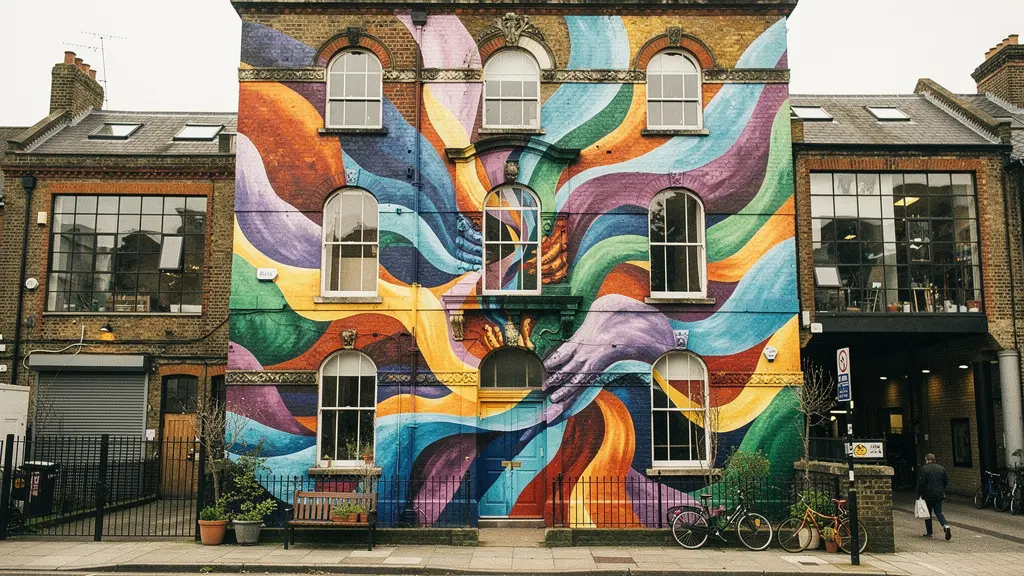
This shift from central, spontaneous graffiti to larger, often-commissioned works in outer zones represents the maturation of the street art scene. It’s a different kind of experience—less about spotting a hidden tag and more about appreciating a monumental piece of public art.
How to See World-Class Art in London for £0 Every Weekend?
One of London’s greatest cultural assets is the sheer volume of world-class art you can see for free. Beyond the permanent collections of national museums, a savvy art lover can construct an entire weekend of gallery-hopping without spending a single pound on admission. This requires a strategic approach that goes beyond simply visiting the Tate Modern.
The first tactic is to embrace the commercial gallery circuit. Unlike museums, these are businesses designed to sell art, and their doors are almost always open and free to the public. Mega-galleries like Gagosian, David Zwirner, and White Cube operate museum-quality spaces and show work by some of the biggest names in contemporary art. Visiting them on a weekday afternoon is a quiet, contemplative experience that feels incredibly luxurious.
The second strategy is to master the art of timed entry. Many institutions offer free access during specific windows. The Whitechapel Gallery, for instance, is open late and free every Thursday. The Photographer’s Gallery offers free entry on Fridays after 4 pm. And of course, the First Thursday events in East London offer an evening of free access across dozens of venues. A little planning can unlock a huge range of paid exhibitions.
Finally, don’t forget that the city itself is a gallery. The Art on the Underground program is one of the largest public art commissions in the UK, transforming the transport network into a dynamic exhibition space. From Mark Wallinger’s ‘Labyrinth’ plaques at every station to major temporary installations, TfL integrates art directly into the daily commute. By combining these three strategies—commercial galleries, timed entry, and public art—it’s entirely possible to immerse yourself in top-tier art every single weekend, completely for free.
Why the White Cube Experience Feels Colder Than the National Portrait Gallery?
Walking into a “white cube” gallery like Gagosian or White Cube is a distinct sensory experience. The silence is heavy, the light is stark, and the architecture is minimalist to the point of being invisible. You feel a sense of reverence, a pressure to contemplate the art in hushed isolation. Contrast this with the National Portrait Gallery: the air buzzes with the low murmur of conversation, the Victorian architecture is ornate and historical, and you feel like part of a communal, shared experience. Why do these two types of spaces feel so radically different?
The ‘white box’ gallery design is engineered for reverence and zero distraction, while the historical, narrative-rich architecture of the National Portrait Gallery fosters a communal, more relaxed viewing experience.
– Art Space Analysis, Gallery Architecture Study
The difference is not accidental; it’s by design. The white cube is an invention of the 20th century, created to strip away all context—history, architecture, and social interaction—so that the artwork (and its commercial value) can be assessed in a vacuum. It is a space engineered for commercial transaction and individual contemplation. The deliberate silence and minimalist design are tools to focus the buyer’s mind and elevate the art object to a sacred status.
The National Portrait Gallery, on the other hand, is a 19th-century public museum. Its purpose is not to sell art, but to tell the story of a nation. The architecture itself is part of that narrative. The ambient sound of other visitors is not a distraction; it’s a sign of a successful public space. The experience is one of communal exploration and historical education. Understanding this fundamental difference in purpose—commercial gallery versus public museum—is key to decoding why they feel so different.
The following table highlights the core philosophical and architectural differences that shape your experience.
| Aspect | White Cube Gallery | National Portrait Gallery |
|---|---|---|
| Architecture | Minimalist white box design | Historical Victorian building |
| Sound Environment | Deliberate silence | Ambient murmur allowed |
| Purpose | Commercial gallery (art for sale) | Public museum (national collection) |
| Viewing Experience | Individual contemplation | Communal exploration |
| Curatorial Approach | Focused thesis on artist’s value | Chronicle of national history |
Graffiti vs Muralism: Who Owns the Walls of the Northern Quarter?
To understand the complex politics of London’s walls, it’s incredibly insightful to look at how another great British city, Manchester, navigates the same issues. The tension between unsanctioned graffiti and commissioned muralism is a global phenomenon in street art, and Manchester’s Northern Quarter serves as a fascinating case study. Unlike London’s often polarized approach—either designated “free walls” or heavily policed zero-tolerance zones—Manchester has fostered a more integrated ecosystem.
The Northern Quarter is a living gallery where large-scale, professionally commissioned murals sit just metres away from raw, illegal graffiti tags and throw-ups. This creates a unique dialogue on the street. Who “owns” the wall? The property owner who commissioned the mural? The graffiti writer who “bombed” it overnight? Or the public who experiences it? In London, the Leake Street tunnel represents a designated zone for this chaos, a ‘permissive graffiti space’ where anything goes. But this isolates the activity. In Manchester, the two worlds collide in the open, forcing a more direct conversation about public space.
This dynamic reveals that “street art” is not a single category. It’s a hierarchy of forms, each with its own codes, techniques, and cultural capital. Understanding this hierarchy is essential to reading the story of a city’s walls, whether in Manchester or London.
Your Action Plan: Decoding the Street Art Hierarchy
- Tags: Identify the base layer of street art. These are the simple signatures, the quickest and most fundamental form of asserting presence. Look for them everywhere.
- Throw-ups: Spot the next level up. These are larger, often two-tone bubble letters, executed quickly but with more style and presence than a simple tag.
- Pieces (Masterpieces): Seek out the complex, multi-coloured works. In London, spaces like the Leake Street Arches (the ‘Banksy Tunnel’) are dedicated zones for artists to create these elaborate pieces, offering a constantly evolving, genuine urban gallery.
- Commissioned Murals: Differentiate the legal, large-scale works. These are often funded by councils or businesses and represent the most ‘acceptable’ face of street art.
- Installation Art: Look for three-dimensional interventions. This is street art that breaks the 2D plane, integrating sculpture or found objects into the urban environment.
Pop-Up Parks: Why Temporary Installations Often Have More Impact Than Permanent Ones?
In a city as dense and historically saturated as London, permanence can be a creative straightjacket. A permanent public sculpture must please everyone, offend no one, and withstand the test of time—a recipe for safe, often bland, art. This is why temporary, ephemeral art installations often have a far greater cultural impact. They are events, not fixtures.
A pop-up installation creates a sense of urgency and discovery. You have to be there *now* or you’ll miss it. This fleeting nature generates a buzz and public conversation that a permanent statue, which quickly fades into the urban furniture, can rarely achieve. It allows artists to be more provocative, timely, and experimental. London’s ‘Art on the Underground’ program is a master of this, consistently commissioning temporary works that challenge commuters and redefine their relationship with public space.
Four contemporary artists—Ahmet Öğüt, Agnes Denes, Rory Pilgrim, and Rudy Loewe—will unveil new installations across London’s Tube network as part of the city’s long-standing ‘Art on the Underground’ program. Since its inception in 2000, the initiative has aimed to make art more accessible while challenging traditional notions of exhibition spaces.
– Zarastro Art, London Underground Art 2025
The power of the temporary is that it can capture a specific moment in time and create a powerful, shared memory. It’s a story that people can tell: “Were you there when…?” This is a much more potent form of engagement than passively walking past the same bronze statue every day.
Case Study: The Power of a Temporary Spectacle
A striking example of ephemeral art’s impact is Ahmet Öğüt’s planned installation, ‘Saved by the Whale’s Tail’. It’s inspired by a real 2020 incident in Rotterdam where a metro train overran its stop and was miraculously saved from a 10-metre drop by a whale tail sculpture. Öğüt’s temporary work at Stratford station will recreate this sense of spectacle and salvation. This piece demonstrates how a temporary, event-based artwork can seize the public imagination and generate far more discussion and emotional resonance than many permanent public monuments.
Key Takeaways
- Mastering London’s art scene is about strategy, not secrets. Success lies in understanding timing, budgets, and geography.
- The most authentic and affordable art is often found at artist-led fairs and in temporary installations, not established galleries.
- Creative energy is migratory. Look beyond the gentrified and commercialised centres to find the new artistic frontiers in outer London.
How Manchester’s Architecture Blends Victorian Red Brick With Modern Glass?
The question of how a city’s architecture—its blend of old and new—shapes its creative soul is a powerful concluding thought. While the title points to Manchester’s specific blend of Victorian red brick and modern glass, this dynamic is a universal metaphor for how creative ecosystems are born. It’s the friction between the established and the emergent, the historical and the contemporary, that generates sparks.
In London, this is the very essence of the underground art scene. The most vital and interesting art spaces are rarely found in purpose-built, modern glass towers. Instead, they colonize the city’s disused Victorian brick structures: abandoned warehouses in Hackney Wick, railway arches in Waterloo, and derelict industrial buildings across the capital. These old structures provide the affordable space and architectural character that new creative movements need to flourish.
They offer a “red brick” foundation of history and authenticity, upon which artists layer a “modern glass” of new ideas and radical expressions. This architectural blend is not just aesthetic; it’s economic and cultural. The old provides the container, the new provides the content. Without the city’s vast stock of industrial heritage, the underground scene as we know it could not exist.
Industrial Heritage as Creative Incubator: Village Underground
A perfect London example of this principle is Village Underground in Shoreditch. The venue is famously constructed from a series of derelict Jubilee line tube carriages perched atop a renovated Victorian warehouse. This is the architectural blend made literal. This repurposed space has become one of London’s most important cultural hubs, hosting everything from art exhibitions and concerts to theatre and workshops. It proves that the most effective creative incubators are not built from scratch, but are born from the imaginative reuse of the city’s industrial past.
Ultimately, whether in Manchester or London, the lesson is the same. The city’s most exciting art isn’t happening in sterile, purpose-built galleries. It’s flourishing in the cracks, in the repurposed and reimagined spaces where the past provides a foundation for the future.
So, close the tourist map and put away the list of top-ten attractions. The real London art scene isn’t in a guidebook. It’s in a repurposed warehouse in an outer borough, in a fleeting installation on the Tube, or at a chaotic gallery crawl you’ve strategically planned. The real exhibition is the city itself. It’s time to start exploring.