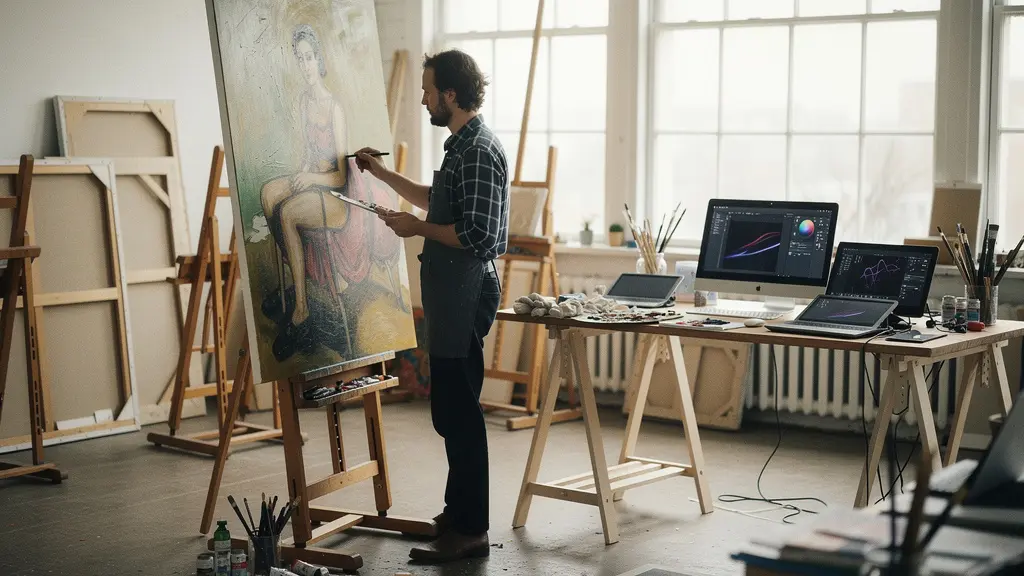
The return of figurative art isn’t about rejecting modernism; it’s a deeply human response to our screen-saturated lives, seeking authenticity that algorithms can’t replicate.
- Contemporary painters are not just copying reality but are exploring emotional truth, reclaiming the body, and documenting our complex social landscape.
- The physical texture of paint and the artist’s unique perspective—the “painter’s hand”—offer a tangible connection that digitally perfect images lack.
Recommendation: Look beyond the technical skill and see these new works as a dialogue with our digital world—a search for what is fundamentally human.
Scroll through any social media feed, and you’ll be met with an endless cascade of faces. They are algorithmically perfected, filtered into flawlessness, and often generated by artificial intelligence. In this deluge of digital perfection, a fascinating counter-movement is gaining momentum not on our screens, but on canvas. Figurative realism, especially portraiture, is experiencing a powerful resurgence. Many will tell you this is simply a cyclical trend, a predictable pendulum swing away from decades of abstract and conceptual art. Others credit the visual nature of platforms like Instagram, where a recognizable face is more “shareable” than a complex idea. While there’s truth to these points, they miss the deeper, more urgent reason for this shift.
The comeback of figurative art isn’t just a reaction; it’s a reclamation. In an age of deepfakes and digital ephemera, we are developing a profound, almost primal hunger for the authentic, the tangible, and the enduring. We crave the evidence of the human touch—what I call the “painter’s hand.” As a portrait painter, I see this not as a return to the past, but as a vital step into the future. It’s a search for a kind of truth that can only be found in the physical layers of paint, in the subtle decisions of an artist interpreting a subject, and in an object that has a real, physical presence in our world. This isn’t about nostalgia; it’s about finding an anchor of humanity in a sea of code.
This article will explore the driving forces behind this revival. We will dissect the nuanced differences between modern realist techniques, see how artists are tackling contemporary themes like identity and social structures, and provide practical advice for engaging with this vibrant art form. We will discover that the painted figure has become more relevant than ever, precisely because of the digital world it now inhabits.
Summary: The Enduring Power of the Painted Figure in a Modern World
- Hyperrealism vs Photorealism: What is the Difference in Technique and Intent?
- Reclaiming the Body: How Female Painters are Changing the Nude Genre?
- How to Commission a Painted Portrait Without It Looking Like an Ancestor?
- The Importance of Life Drawing Classes for Digital Animators?
- Disrupted Realism: Why Glitch Aesthetics are Entering Oil Painting?
- Why Mixing Tropical Beaches With Scottish Glens Confuses Your Client?
- The British Class System: How Photographers Document Social Divides Today?
- How to Choose Between Oil and Acrylics for Layering Techniques?
Hyperrealism vs Photorealism: What Is the Difference in Technique and Intent?
To understand the current wave of realism, we must first clarify our terms. Many use “photorealism” and “hyperrealism” interchangeably, but their intent is fundamentally different, especially in the context of the digital age. Photorealism, which emerged in the 1960s, is primarily an exercise in technical mastery. Its goal is to reproduce a photograph as faithfully as possible, often with a cool, detached precision. The artist’s hand is intentionally erased to mimic the mechanical nature of the camera. It’s a flawless translation of one medium to another.
Hyperrealism, while born from the same technical DNA, takes a significant step further. It uses the photograph as a starting point but aims to create a new reality that feels more intense and emotionally charged than the original photo. As the Graphic Eagle Design Team notes, “Photorealism seeks to replicate photography. Hyperrealism adds emotion, exaggeration, or surreal themes, often going beyond what a camera can capture.” This is where the painter’s hand reappears, not in visible brushstrokes, but in narrative and emotional choices. The hyperrealist might amplify the glint in an eye, deepen the shadow under a chin, or subtly alter the context to tell a story the camera missed. It’s the difference between documenting a face and interpreting a soul.
Today, this distinction is further complicated and enriched by digital tools. Artists now seamlessly blend traditional skills with software like ZBrush and even AI platforms to create their source images. This fusion allows them to build scenes that are photographically believable yet conceptually impossible, blurring the line and pushing realism into a new territory of subjective, emotional storytelling.
Reclaiming the Body: How Female Painters Are Changing the Nude Genre?
Nowhere is the power of the new figuration more apparent than in the way contemporary female artists are reclaiming the nude. For centuries, the female form in Western art was largely an object of the male gaze—idealized, passive, and perfected. Today, painters like Jenny Saville, Cecily Brown, and Lisa Yuskavage are dismantling this tradition from within, using the raw, physical medium of paint to explore an authentic, unvarnished, and powerful vision of the female body.
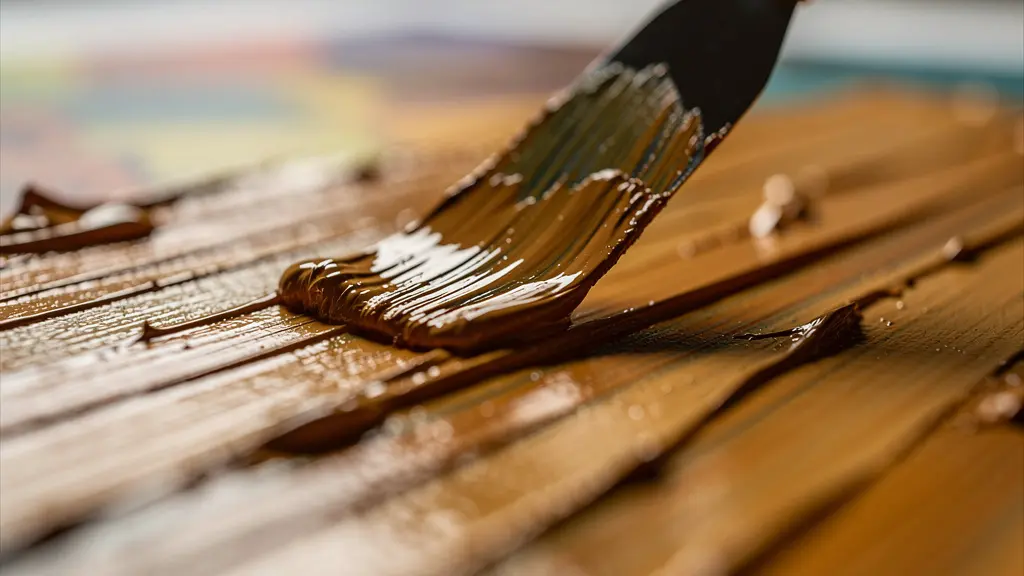
This is not about creating “unflattering” portraits; it is about rendering a “tangible truth.” Saville’s monumental canvases depict flesh that is pushed, compressed, and marked by life. She uses thick, visceral impasto, where the paint itself becomes a metaphor for skin and mass. In her own words, she works at the “tension between getting the paint to have the sensory quality that I want and be constructive in terms of building the form.” This focus on the material quality of paint creates a profound connection between the viewer and the subject—you don’t just see the body, you feel its weight and presence.
The art market has taken notice, confirming this is a major cultural shift. In 2018, Jenny Saville’s groundbreaking self-portrait ‘Propped’ (1992) sold for $12.4 million at auction, setting a record for a living female artist. This wasn’t just a sale; it was a statement. It validated a new narrative where the female body is a site of strength, complexity, and subjective experience, rendered with an honesty that challenges classical ideals of beauty and asserts agency over its own representation.
How to Commission a Painted Portrait Without It Looking Like an Ancestor?
The idea of commissioning a portrait can be intimidating, often conjuring images of stiff, formal sittings resulting in a painting that feels more like a historical document than a reflection of a living person. However, the resurgence of contemporary realism has completely transformed this process. Today’s portrait is a collaboration, a narrative construction that aims to capture not just a likeness, but a personality, a story, and a modern context. It’s about creating a piece of art that feels alive and relevant in the 21st century.
The key is to move beyond the traditional mindset. Forget the static pose and dark, ambiguous background. A contemporary portrait should integrate elements of the subject’s life and passions. As one collector shared about their experience:
Working with a contemporary realist painter was completely different from traditional portraiture. We used Zoom calls and shared Pinterest boards to develop the concept. The final painting includes elements from my home office and incorporates my architectural drawings in the background, making it a true 21st-century portrait that tells my story.
– Collector, as featured in Realism Today
This collaborative approach ensures the final work is a personal statement, not a generic representation. To achieve this, a clear process is essential.
Your Action Plan: Commissioning a Contemporary Portrait
- Research and Vision: Explore contemporary realist painters. Look for artists whose style resonates with you, particularly those working in narrative or ‘disrupted’ realism. Create a digital mood board on Pinterest to collect and share your aesthetic preferences.
- Consult and Collaborate: Schedule video consultations with your chosen artist. Discuss the portrait’s context, setting, and story, moving beyond traditional poses to something that reflects your life.
- Incorporate Modern Life: Brainstorm meaningful environmental elements to include. This could be your workspace, symbols of your hobbies, a cherished view, or items that tell your personal or professional story.
- Digital Mock-ups: Request preliminary digital sketches or mock-ups. This modern step allows you to align on composition and narrative before the artist commits paint to canvas, ensuring the vision is shared.
- Focus on Narrative: The goal is to create a scene, not just capture a likeness. Think about what story you want the portrait to tell future generations about who you were in this specific moment in time.
The Importance of Life Drawing Classes for Digital Animators?
It may seem counterintuitive that in an age of powerful 3D modeling software and motion capture technology, digital animators are still flocking to traditional life drawing classes. But this practice is more crucial than ever, and it speaks directly to the core reason figurative art is resurging: the irreplaceable value of understanding physical reality. An animator can learn software commands from a manual, but they can only learn the felt sense of weight, balance, and muscular tension from observing a living, breathing human body.
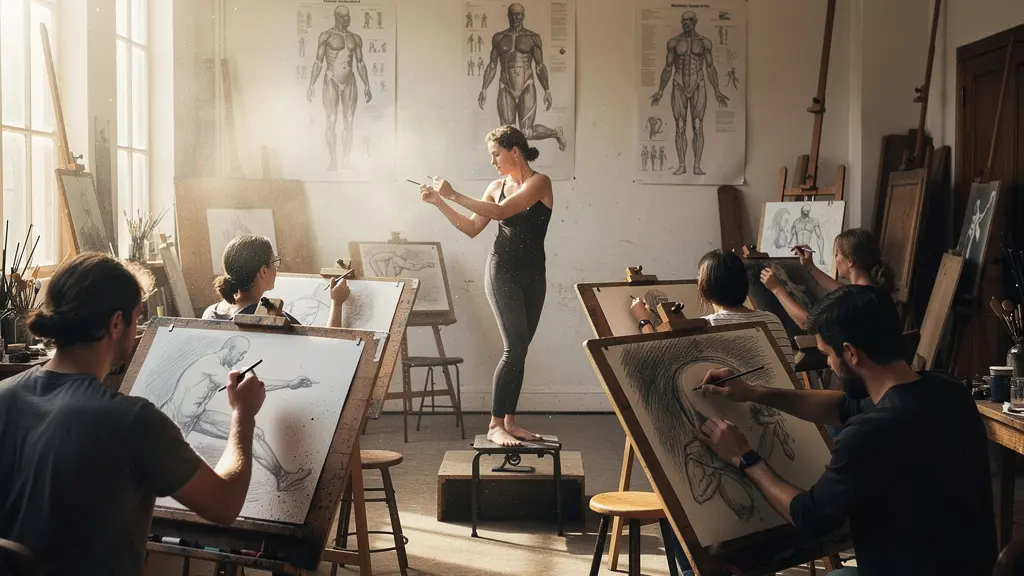
Life drawing is not about creating a finished, polished illustration. It’s about training the eye and hand to understand form and movement. Through quick gesture sketches, artists learn to capture the essence of a pose—the line of action that conveys energy and intent. In longer studies, they learn how muscles stretch and contract, how gravity pulls on a figure, and how bones create the underlying structure of any pose. As one industry expert states, “A deep understanding of weight, gravity, and anatomy gained from life drawing allows animators to create characters that move with a convincing sense of physicality that procedural animation alone often lacks.”
This knowledge is the secret ingredient that separates stiff, robotic animation from character performance that feels alive and believable. The global animation industry is booming, and industry analysis reveals the worldwide 3D animation market is predicted to hit $4.36 billion by 2031. In this competitive landscape, studios from Pixar to smaller indie houses prize animators who possess this foundational drawing skill. It is the “painter’s hand” translated into the digital realm—a human understanding of the physical world that gives soul to a creation of code.
Disrupted Realism: Why Glitch Aesthetics Are Entering Oil Painting?
One of the most compelling signs of figurative realism’s relevance is the way it is absorbing and responding to our digital existence. A growing movement, sometimes called “Disrupted Realism,” sees painters intentionally introducing digital-age errors—glitches, pixelation, and data corruption—into their traditional oil paintings. This isn’t a gimmick; it’s a profound commentary on the fragility and nature of modern reality, where our lives are mediated through screens that can freeze, fracture, and fail. The painter’s hand is used to meticulously, physically replicate an ephemeral digital mistake.
Artists achieve these effects through innovative uses of traditional techniques. A painter might use a palette knife to scrape across a perfectly rendered face, creating a blocky distortion that mimics a corrupted JPEG. Others might use solvent drips or layered “erasures” to suggest a lagging video feed or a fragmented image file. This act of translating a digital flaw into a permanent, physical mark on canvas creates a powerful dialogue between the handmade object and the fleeting nature of code. It captures the very anxiety of our digital lives: the sense that the images we rely on are unstable and our connection through them is tenuous.
This trend directly reflects our immersion in a world influenced by digital rendering. Artists are not painting in a vacuum; they are responding to the visual language around them. As detailed in an analysis of digital aesthetics in traditional painting, this movement serves as a bridge, making the digital world a subject for physical contemplation. By rendering a glitch in oil paint, the artist forces us to consider the texture of a digital error, the weight of a pixel, and the human experience of living within a system that is both miraculous and prone to breaking down.
Why Mixing Tropical Beaches With Scottish Glens Confuses Your Client?
A client commissioning a landscape might expect a faithful, documentary-style depiction of a specific place. So when a painter presents a canvas that combines a Caribbean shoreline with the misty hills of the Scottish Highlands, the initial reaction might be confusion. But this very “confusion” is one of the most powerful tools that separates the painter from the photographer. While a photographer is bound to capture a single, existing reality, a painter has the freedom to construct a new one. Their goal is not documentary truth, but emotional or psychological truth.
Contemporary realists like Peter Doig or David Ligare are masters of creating what can be called “plausible impossibilities.” Doig blends dreamlike personal memories with found media images to create scenes that feel familiar yet unsettlingly strange. Ligare draws on the structure of classical Greco-Roman landscapes but places them in a distinctly Californian light. This intentional merging of disparate elements is a surrealist strategy designed to bypass the logical mind and tap directly into subconscious and emotional responses. The landscape becomes a stage for an internal state, not an external location.
This fundamental difference in approach is where the painter’s unique value lies in the age of ubiquitous photography. Anyone can take a picture of a beach; only a painter can construct a beach that embodies a specific feeling of longing, memory, or dislocation. The following table, based on analysis from art historians, breaks down this distinction:
| Aspect | Photographer | Painter |
|---|---|---|
| Relationship to Place | Bound to a single location/moment | Can combine multiple locations/times |
| Type of Truth | Documentary / literal truth | Emotional / psychological truth |
| Creative Process | Captures existing reality | Constructs new, subjective reality |
| Viewer Impact | Recognition and documentation | Surreal or emotional response |
The British Class System: How Photographers Document Social Divides Today?
While the title asks about photographers, a more profound shift has occurred: contemporary figurative painters have stepped into the role of our most insightful social documentarians. For much of the 20th century, documentary photography was the primary medium for exploring social issues like class, power, and identity. But in an era oversaturated with photographic images, the slow, deliberate, and interpretive nature of painting now offers a more powerful way to make abstract social structures visible and tangible. As a Contemporary Art Issue editorial puts it, “Contemporary figurative painters have become the new social documentarians, using realism to explore global issues of class, power, and identity.”
Artists like Kehinde Wiley and Liu Xiaodong are prime examples of this shift. Wiley’s monumental portraits place contemporary Black men and women from urban environments into the heroic poses and opulent settings of classical European aristocracy. This act of appropriation and re-contextualization is a powerful visual critique of art history’s exclusionary past and a celebration of Black identity. He uses the grand language of Old Master painting to ask urgent questions about who has power and who is deemed worthy of representation. It is history painting for the 21st century.
Similarly, Liu Xiaodong’s large-scale canvases capture the human impact of China’s rapid and often brutal social and economic transformation. He paints ordinary people—workers, migrants, families—dwarfed by massive construction projects or displaced by modernization. As described in a survey of figurative painting as social commentary, both artists use scale, composition, and symbolism to give form to the invisible forces of systemic inequality and historical change. The painter’s hand renders these complex issues with an emotional weight and permanence that a fleeting news photo often cannot.
Key Takeaways
- The return of figurative painting is a search for authenticity and the “human touch” in a world saturated by digital and AI-generated images.
- Contemporary artists like Jenny Saville are using the physical, tangible quality of paint to reclaim the body and challenge historical representations.
- Painters are not ignoring the digital age but are actively incorporating its aesthetics, like glitches and pixelation, to comment on our modern reality.
How to Choose Between Oil and Acrylics for Layering Techniques?
For any artist or collector drawn to this resurgence of realism, the choice of medium is a fundamental decision that profoundly impacts the final work’s aesthetic and conceptual weight. The two dominant choices, oil and acrylic, are not merely different substances; they offer distinct philosophies for building an image, especially when it comes to layering. The choice is a commitment to a certain kind of reality. Do you want the luminous depth of the analog world or the sharp immediacy of the digital one?
Oils are the traditional medium of the Old Masters, and their slow-drying nature is their greatest asset for layering. This allows for techniques like glazing (applying thin, transparent layers of color) and extended wet-on-wet blending. Each transparent glaze modifies the layers beneath, creating an unparalleled sense of depth, light, and atmosphere. This is the medium of “tangible truth”—the final surface is a physical record of time, with previous stages of the painting’s life shimmering through. It’s ideal for rendering the subtle translucency of skin or the deep, atmospheric haze of a landscape.
Acrylics, a 20th-century invention, are the opposite. They dry quickly, forming an opaque, plastic-like film. This speed is perfect for creating sharp, hard edges, flat fields of color, and rapid layering where the artist wants to completely conceal what is underneath. This quality makes acrylics the perfect medium for engaging with our digital world. Their immediate, flat, screen-like finish can evoke the look of a digital display, and their fast-drying nature is ideal for creating the sharp, graphic effects of “disrupted realism” and glitch aesthetics. This is reflected in market trends, where the digital painting segment holds over 30% of the digital art market, influencing the aesthetics of physical media.
- For luminous, atmospheric depth: Choose oils for their transparency and slow blending time.
- For sharp, graphic, screen-like reality: Select acrylics for their fast drying time and opacity.
- To show history and time: Oils reveal previous layers through glazes.
- To create bold, immediate impact: Acrylics conceal previous layers for a clean, graphic look.
The resurgence of figurative realism is a powerful reminder that in our rush toward a digital future, we still yearn for the unique, irreplaceable mark of a human hand. The next step is to see this for yourself. Visit a local gallery, research the contemporary realists mentioned here, and experience the tangible truth of a painting in person.